Empowering the art community with a platform for networking and content discovery
My role
Designed a fictional social network for the art community, conducting user research, creating flows, wireframes, and prototypes for four personas, and developing branding and a scalable design system.
Tools
Figma, FigJam, Miro
Overview
Connecting artists and audiences worldwide
White Screen is a concept project I created from scratch, drawing on my years of experience in the art industry. In this project, I designed a social network that provides art community members with simple tools to discover and manage art content, build professional connections and reach international audiences.

The challenges
Barriers to unlocking art opportunities
Art-related content (such as information about artworks, events, open calls, and job offers) is scattered across multiple sources, making it time-consuming for users to find relevant information.
Building professional connections and reaching new audiences, especially internationally, is difficult for emerging artists and galleries.
The art world relies on outdated administrative practices, slowing workflows and making processes more complicated.
The goals
A unified platform for art discovery and networking
Centralize and organize art-related content in a single and easily accessible system with intuitive tools for creating, managing, and sharing collections, portfolios and other related content.
Enable professional connections and collaboration within the art community through an interactive platform for networking, engagement, and global discussions.
Enhance content discovery and personalization with tailored search functionality and customized profile pages for different user personas.
The research
Top issues that came up from interviews I conducted with members of the art community
Information on open calls, grants, exhibitions, and art events is scattered across multiple sources, making relevant resources difficult to find.
After a purchase, artists and galleries often stay in contact with clients via newsletters rather than through personal relationships due to time constraints.
They all use social media to find new clients and artists, but without proper search filters, it's like looking for a needle in a haystack.
In order to find official representation, artists reach galleries by emailing them their portfolio. Only few get a proper response.
Collectors often want to showcase their collections but hesitate to lend artworks due to the risk of damage in transit.
Artists would like to collaborate more with other artists, but they don’t know how to start.
Due to a lack of a better system, most of them rely on spreadsheets to manage their artworks’ information.
Jobs to be done
Tailoring the platform to key roles
Artists
Artists spend too much time hunting for grants, exhibitions, and clients across different sites, leaving less time to actually create. They need one place to find opportunities and promote their work without the constant search.
Art collectors
Many collectors, especially beginners, don’t know where to find trusted art professionals, events, or emerging artists. With limited time to navigate the art world on their own, they need an easy way to discover new talent, get support for their collection, and connect with the community.
Galleries
With outdated administrative processes and irrelevant submissions slowing their workflow, galleries need a modern platform to find relevant artists and reach international audiences, so they can focus on curating and promoting art.
Professionals
Many art professionals work as freelancers due to limited full-time jobs and struggle to find clients or promote themselves. They need a platform to find clients, network, and discover projects to secure steady work and grow professionally.
Market analysis
Learning from the gaps in existing platforms
Art database websites like Artnet lack real-time engagement, and the ability to connect users or facilitate complex interactions, while social media platforms for visual content like Instagram offer limited activities with the content published.
Proper visual display is crucial for optimal and professional presentation of artworks, and profiles should function as portfolios to showcase art collections effectively, similar to Behance.
Visual content platforms have limited search filters, which restrict the accuracy and relevance of the results, highlighting the need for clear and intuitive content organization.

Wireframes
Planning the user experience
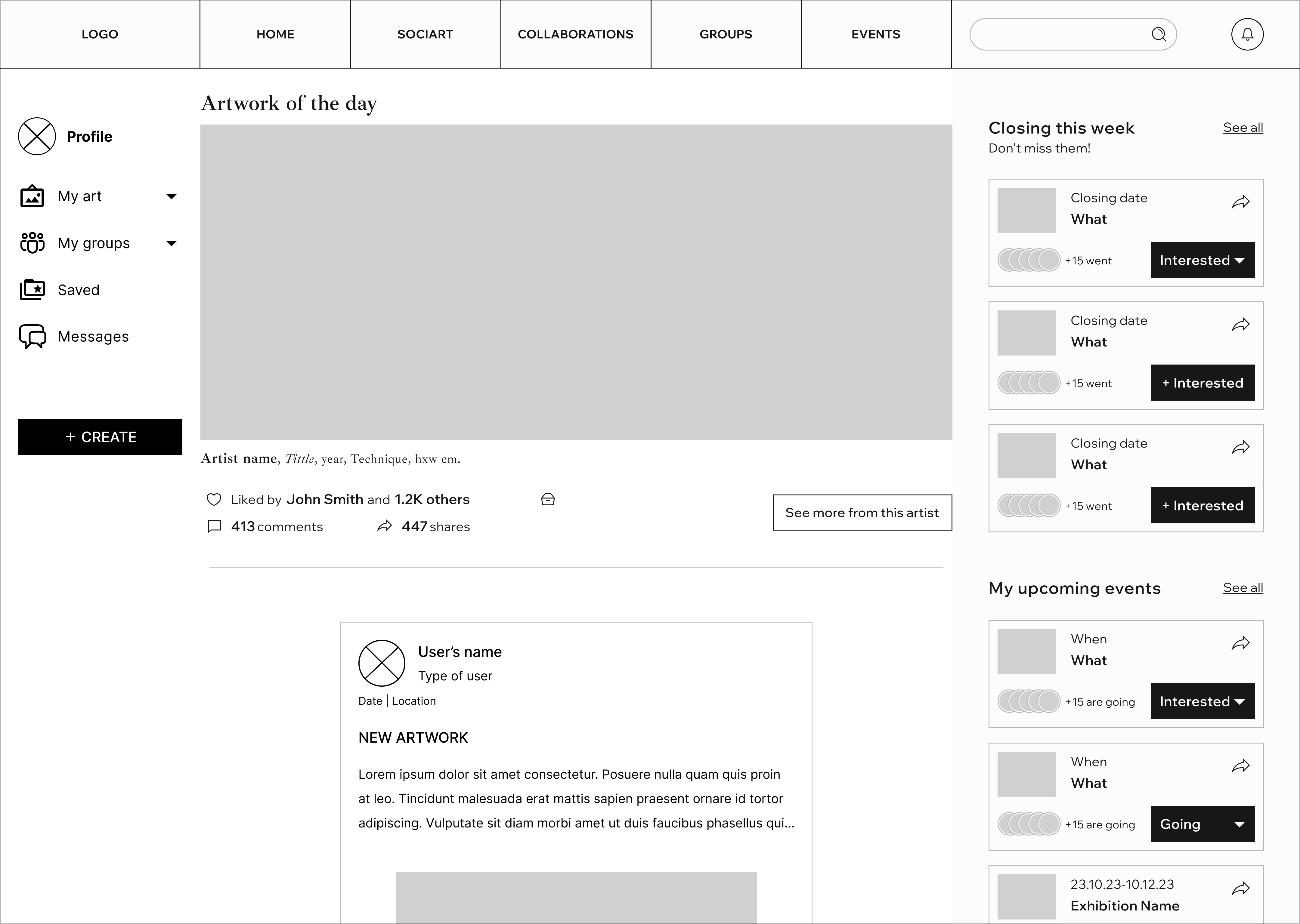
Homepage
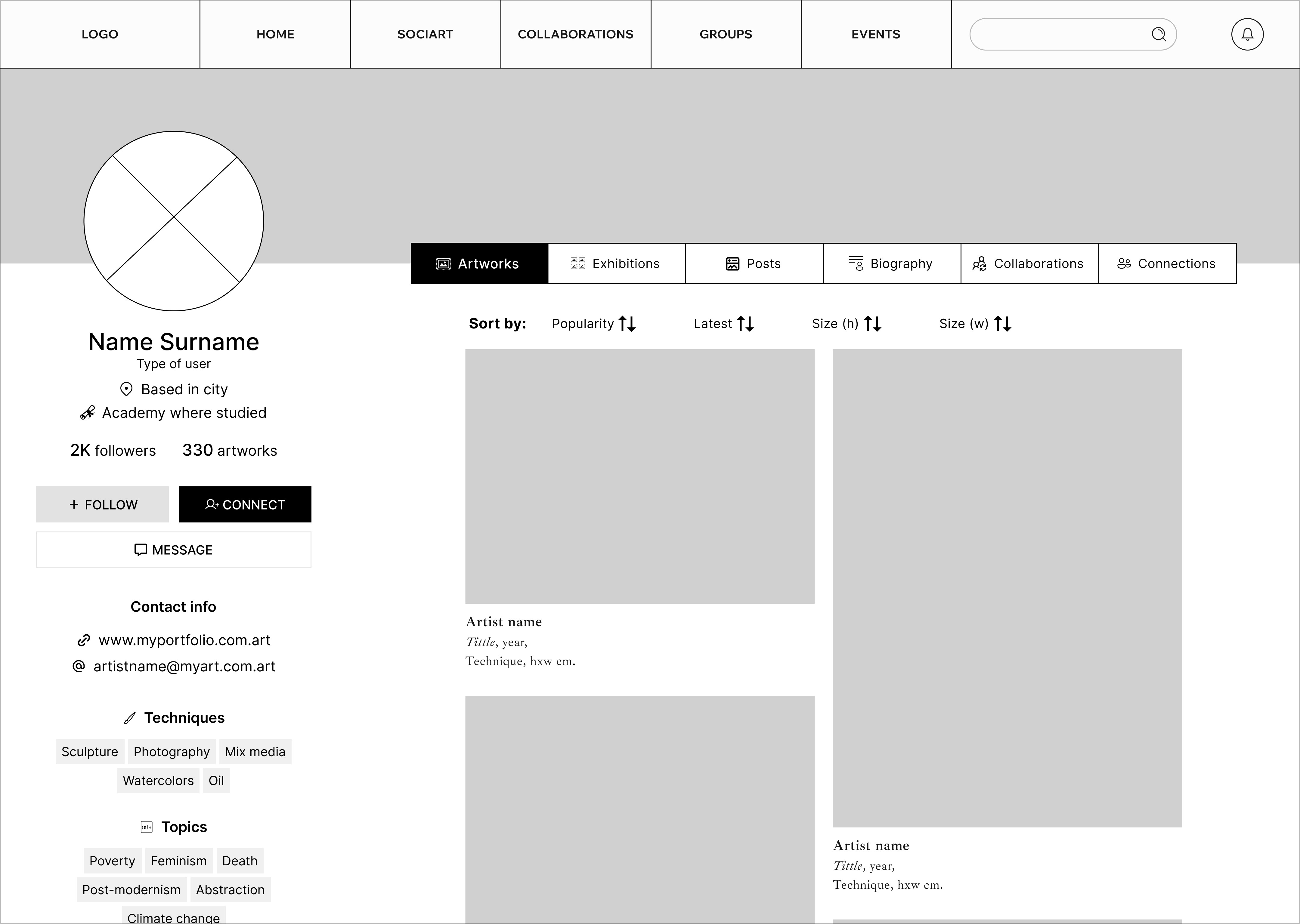
Artist profile
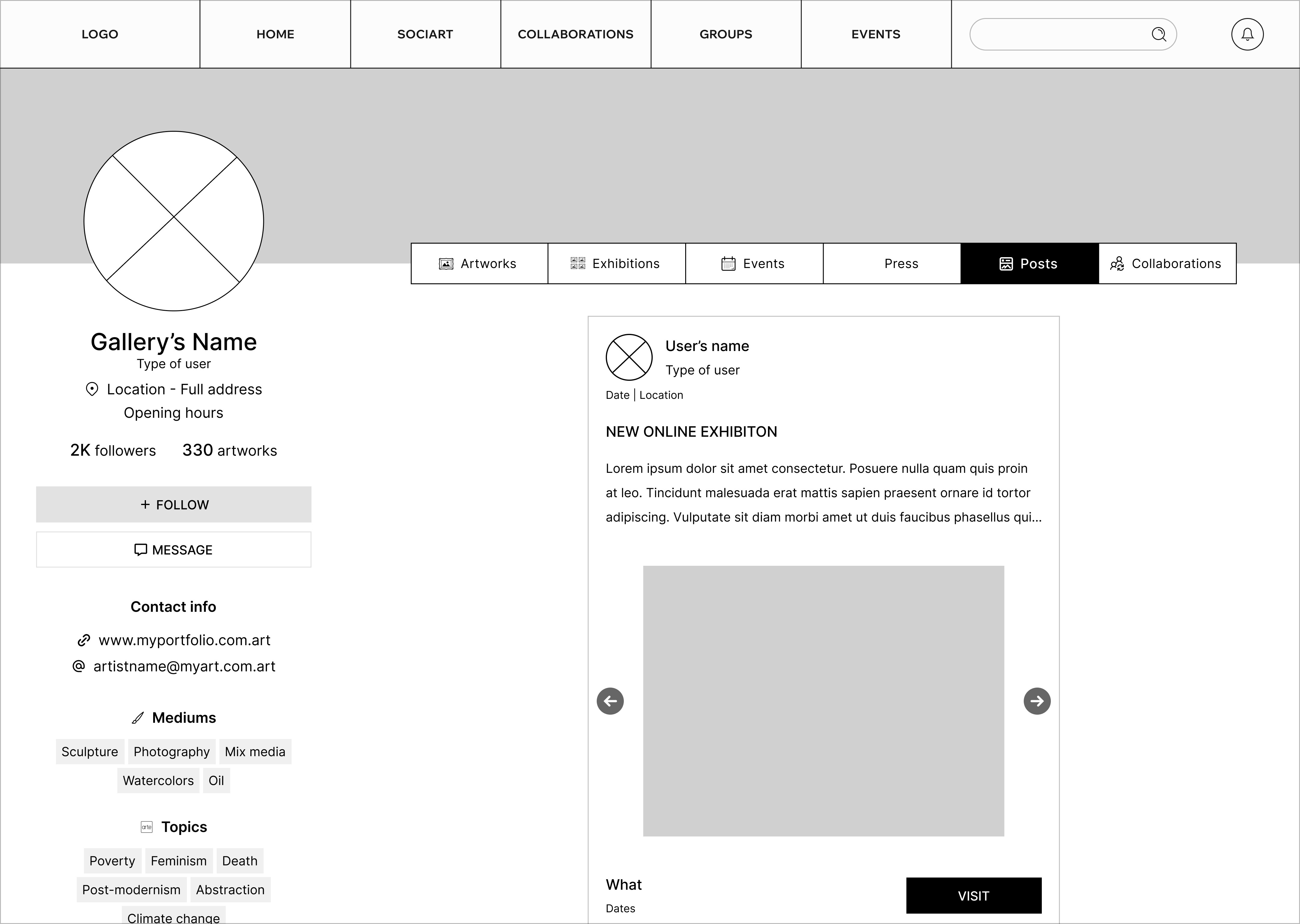
Gallery profile
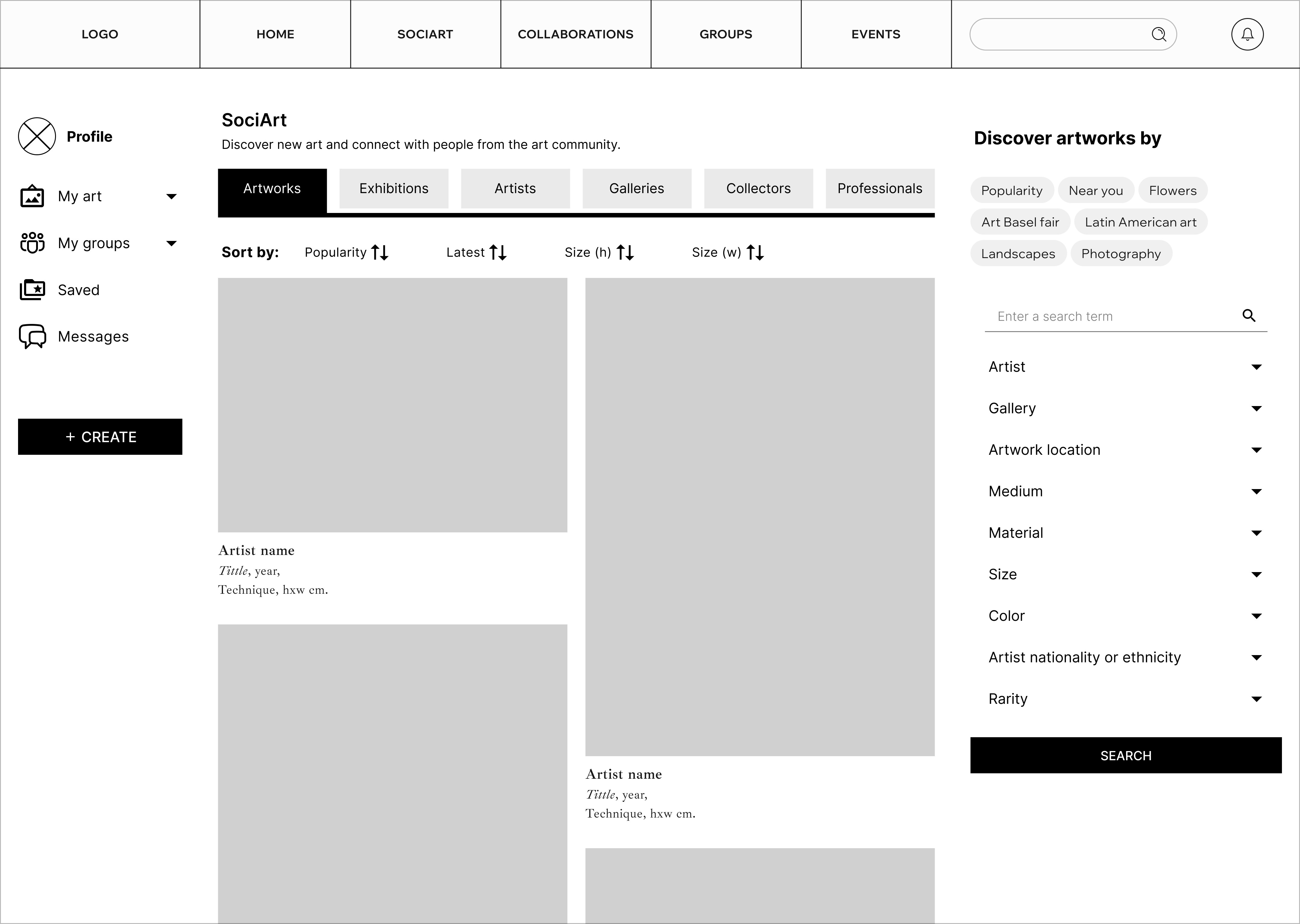
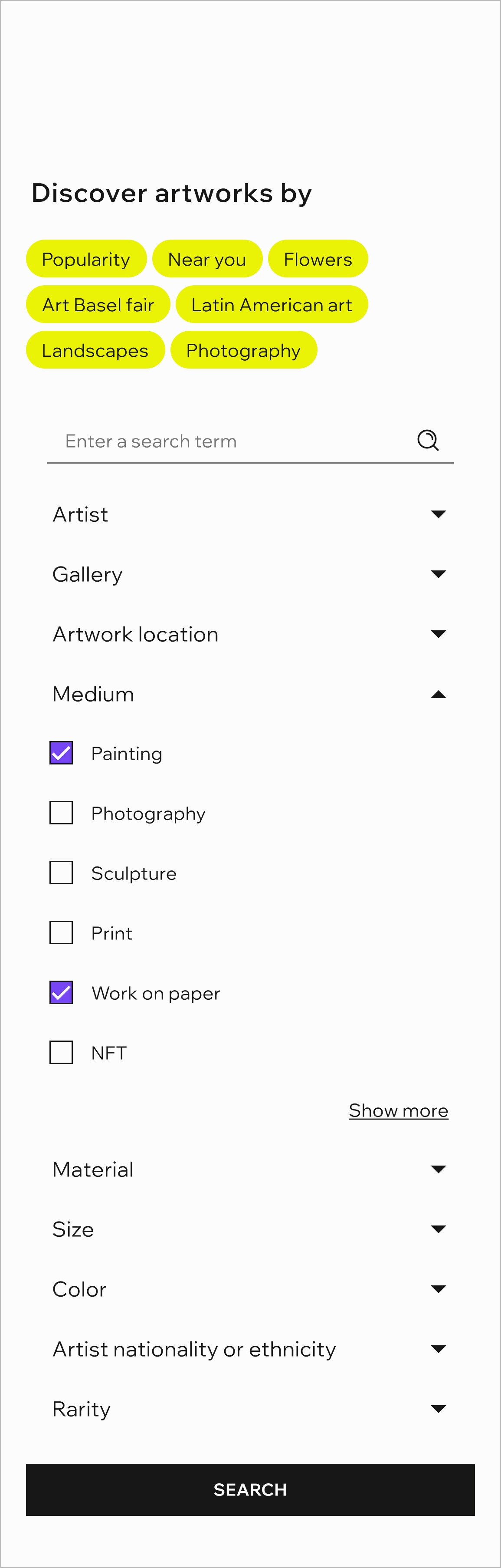
Artworks discovery
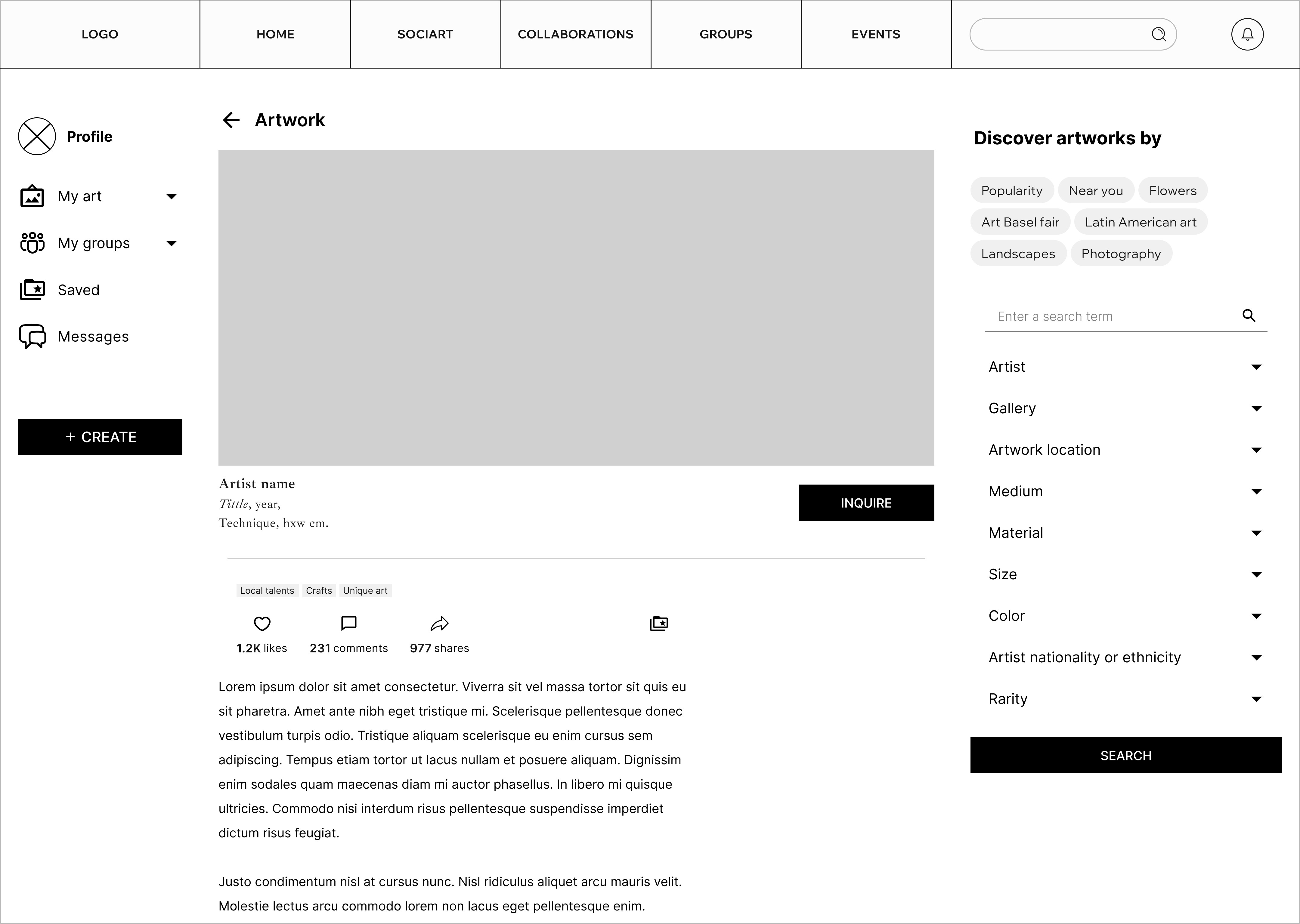
Artwork page
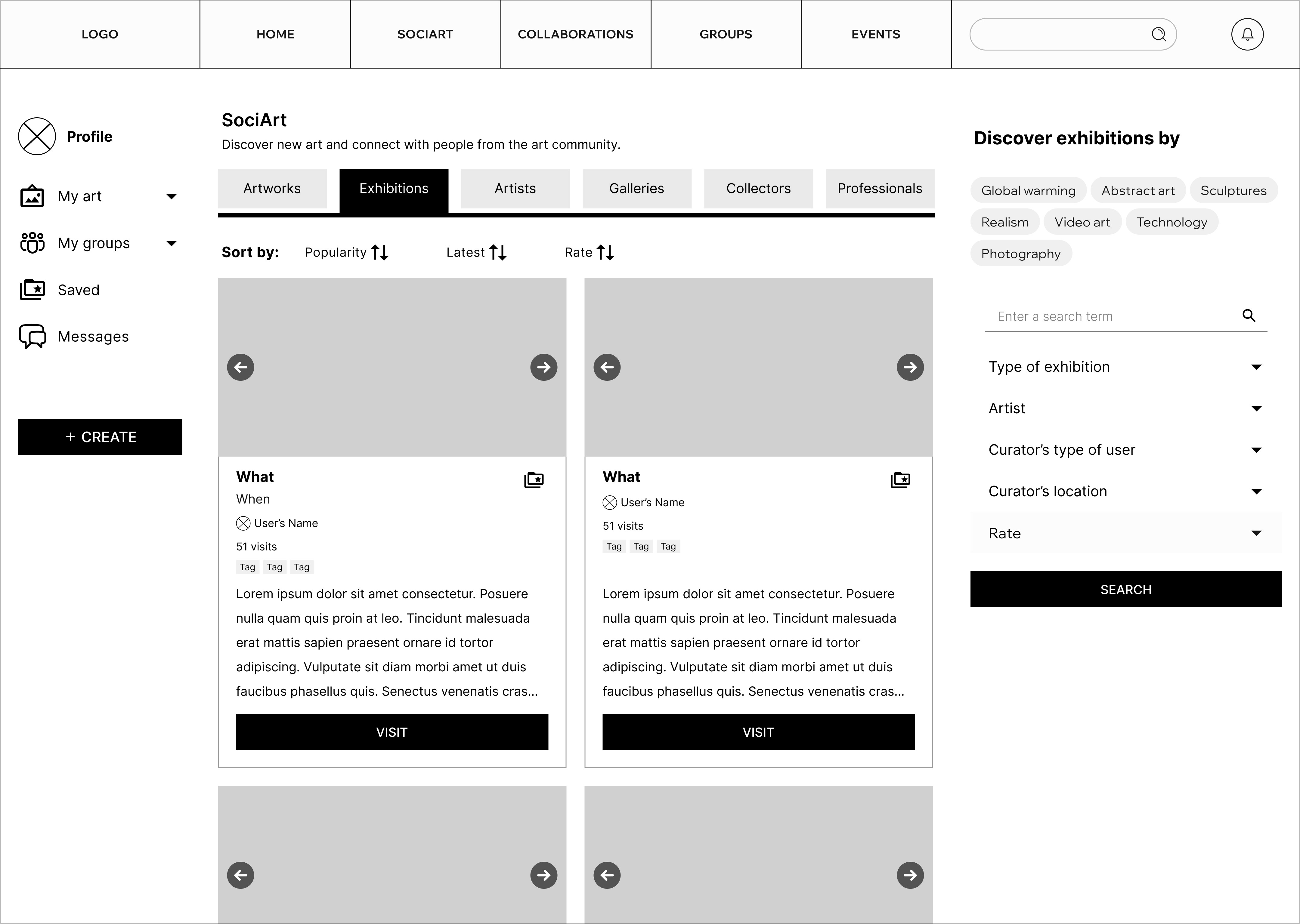
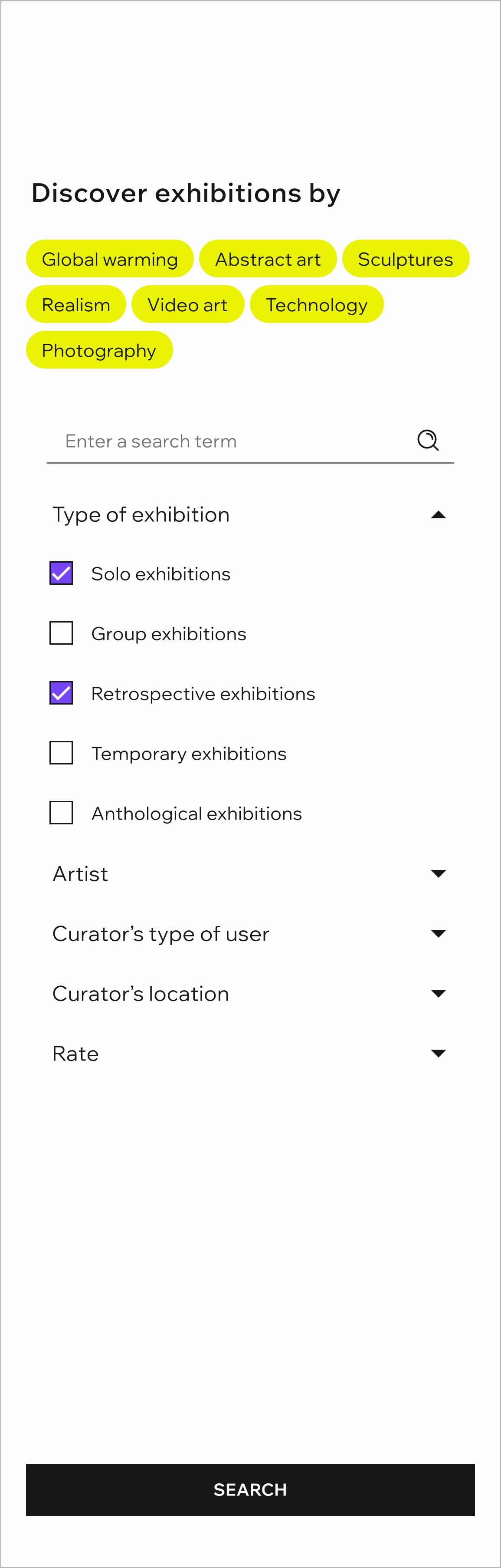
Exhibitions discovery
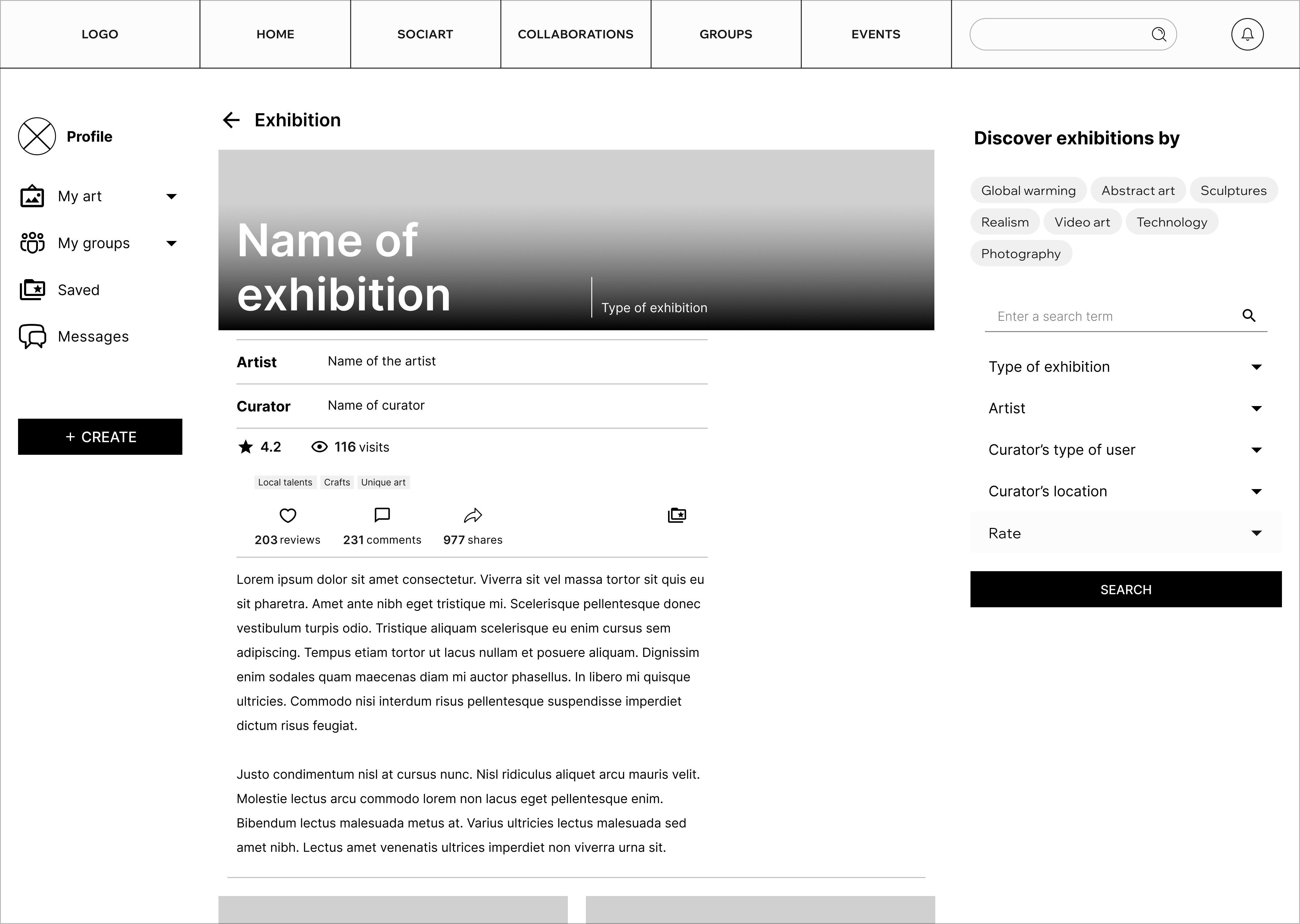
Exhibition page
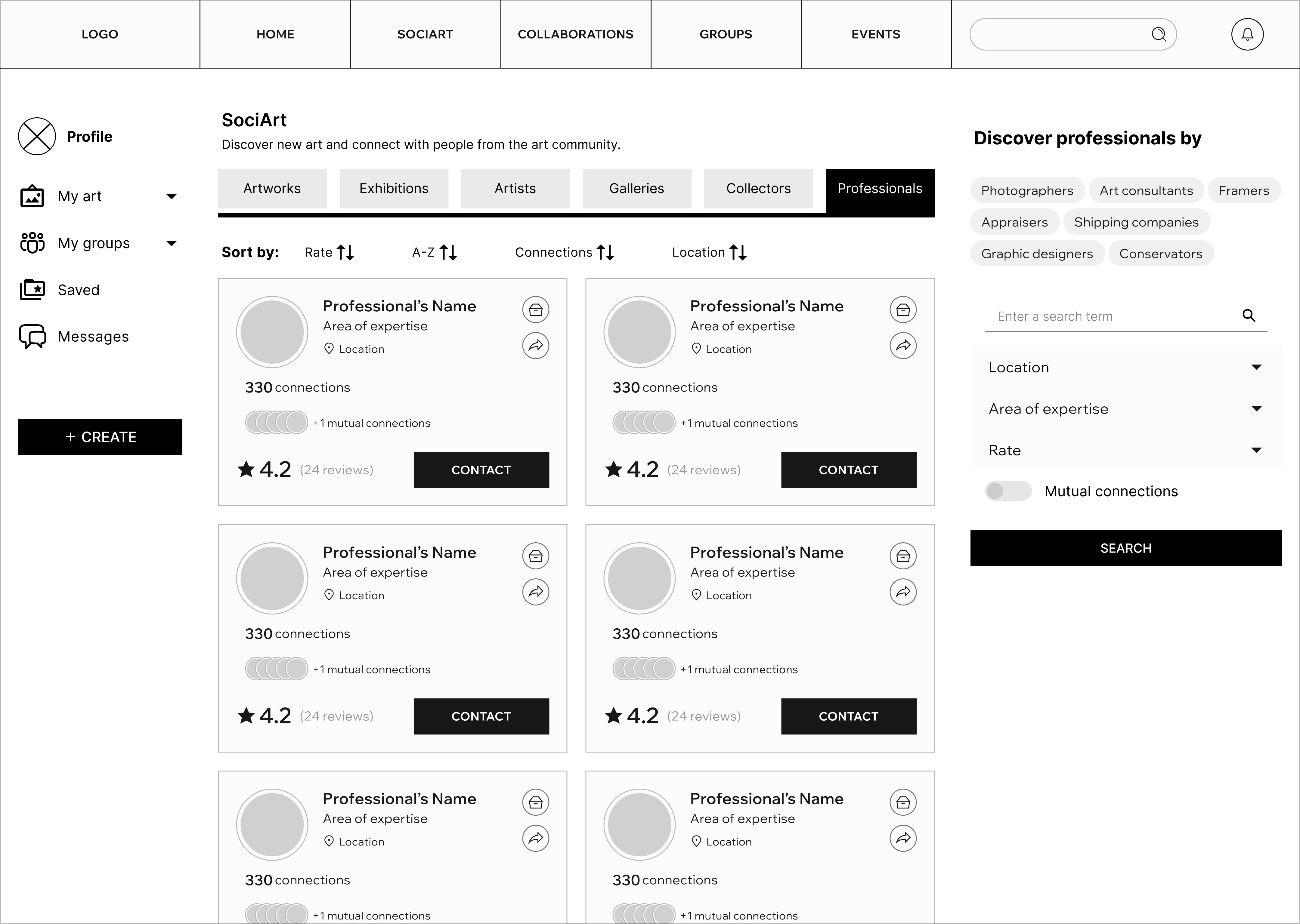
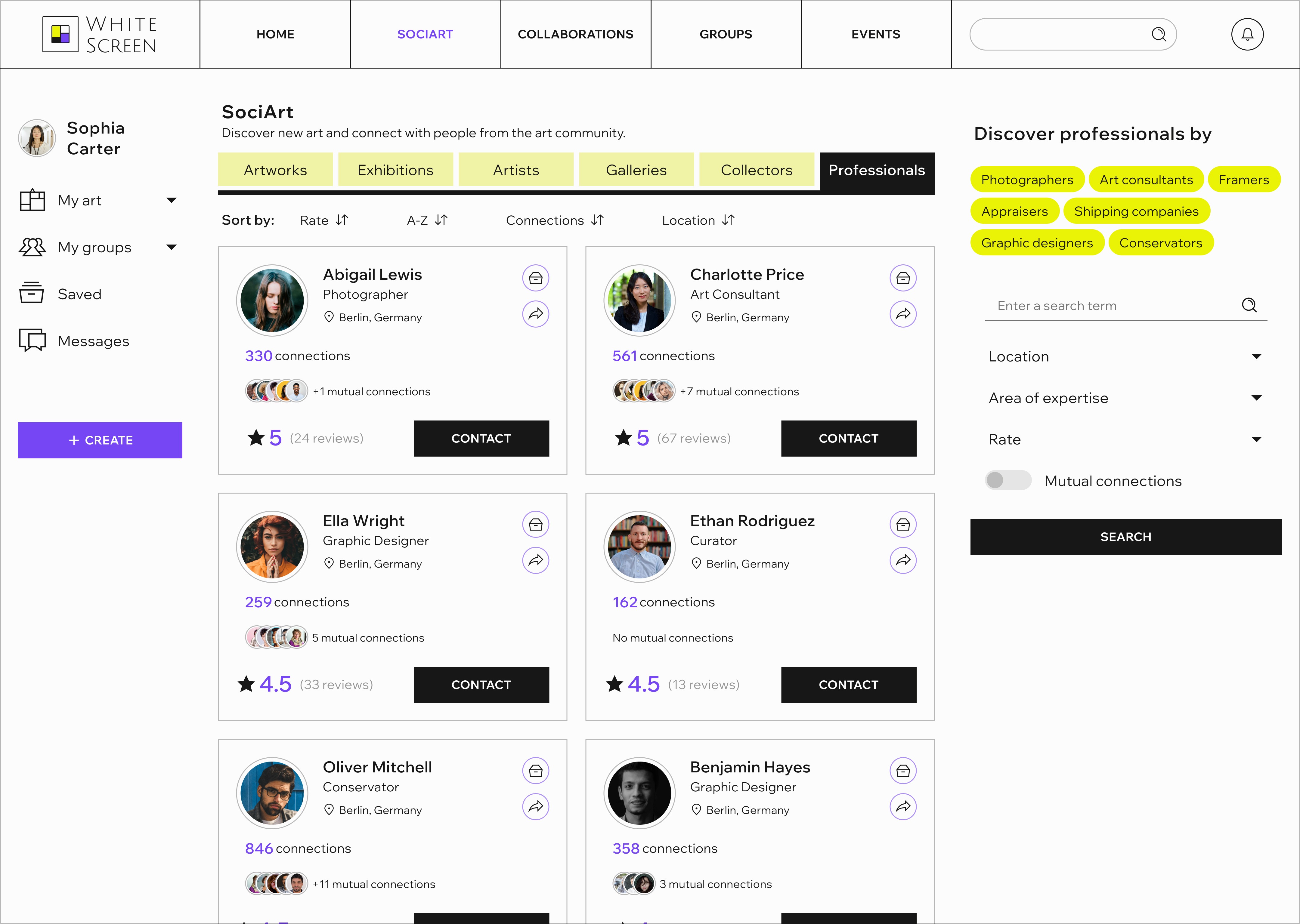
Professionals discovery
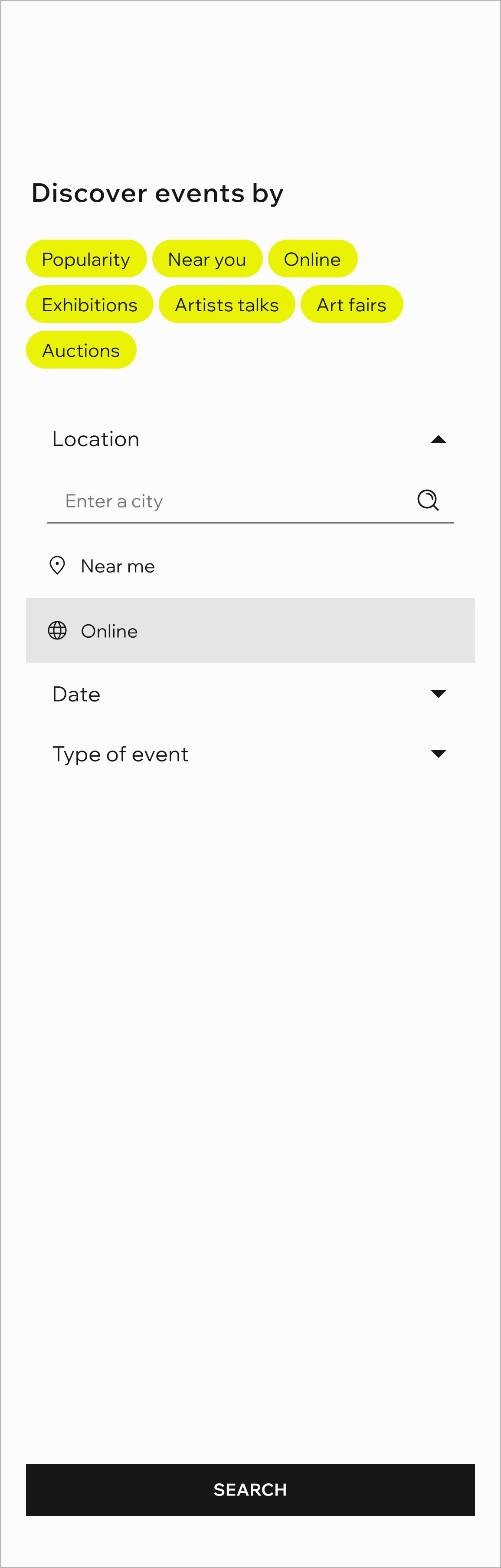
Events discovery
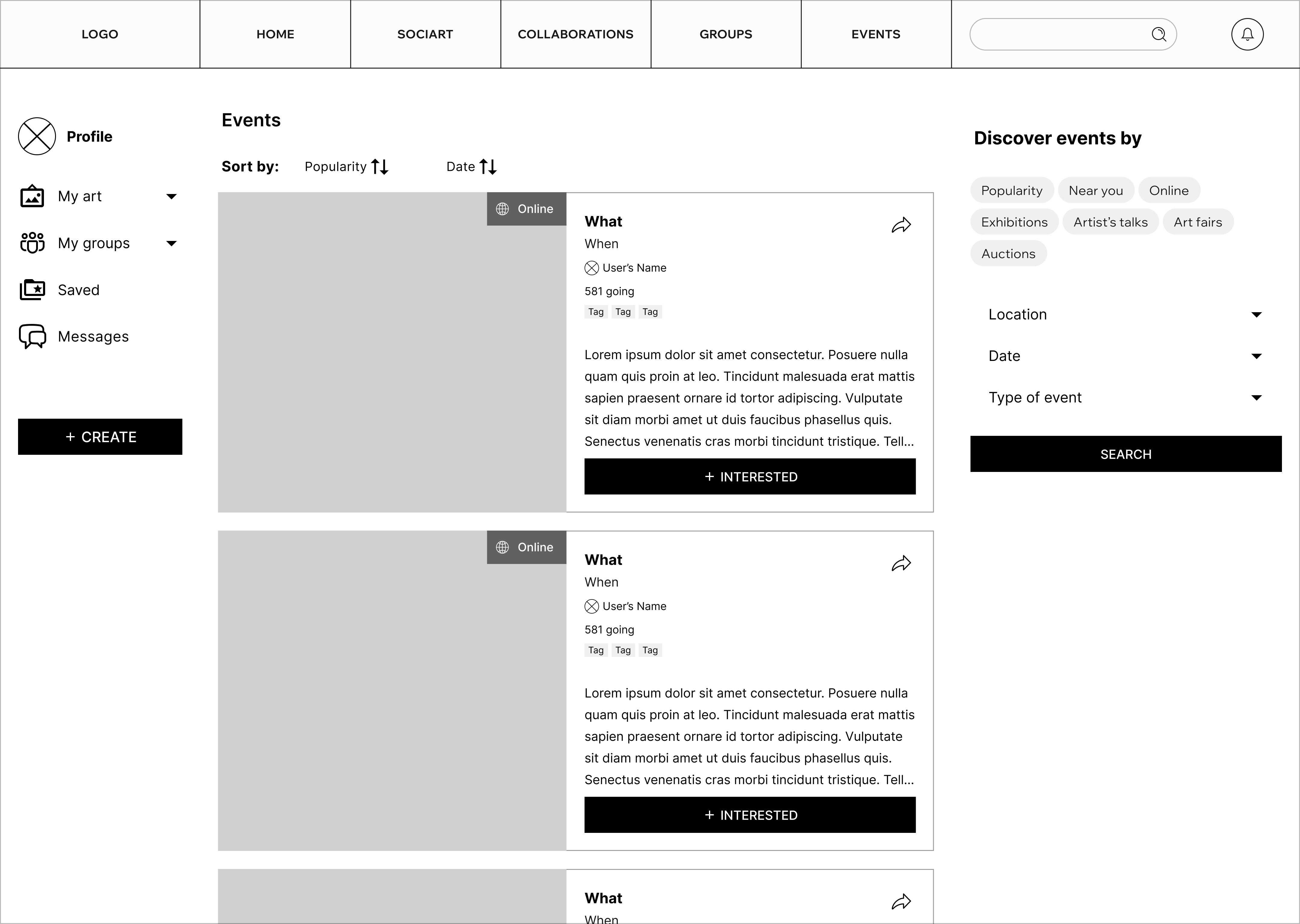
Core screens
Designing the platform around user needs
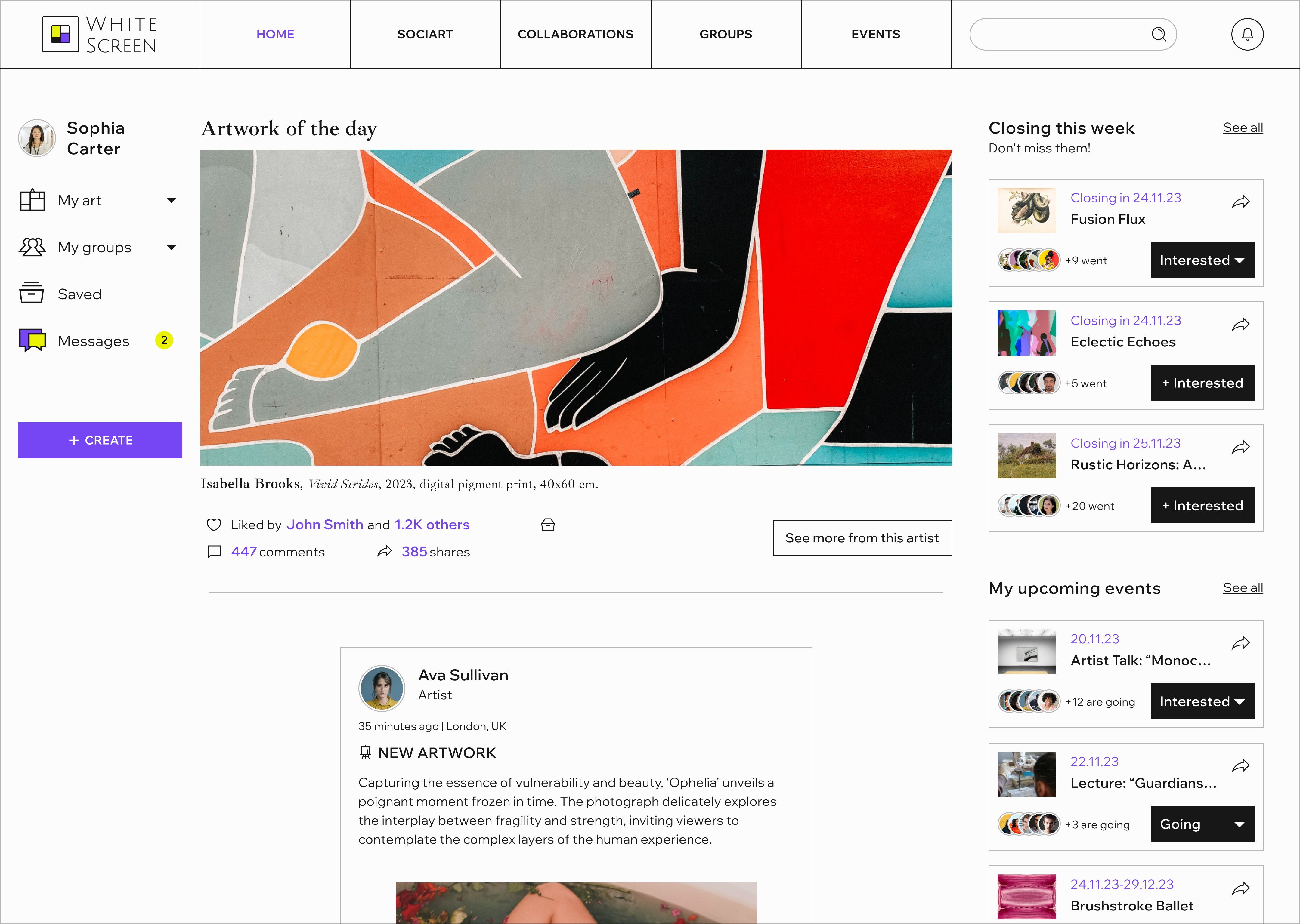
Engaging users from the first glance
The right panel in the homepage is designed to remind users of upcoming events they’ve shown interest in, as well as notify them of exhibitions closing soon, ensuring they don't miss the chance to visit.
To enhance the discovery of new art beyond users' personal preferences, I added a panel at the top of the feed to promote a different artwork every day, increasing exposure. This allows users to explore new artists and discover options they might not have considered. This feature also serves as a decorative element on the homepage, appealing to the art community and adding an extra touch to the experience.
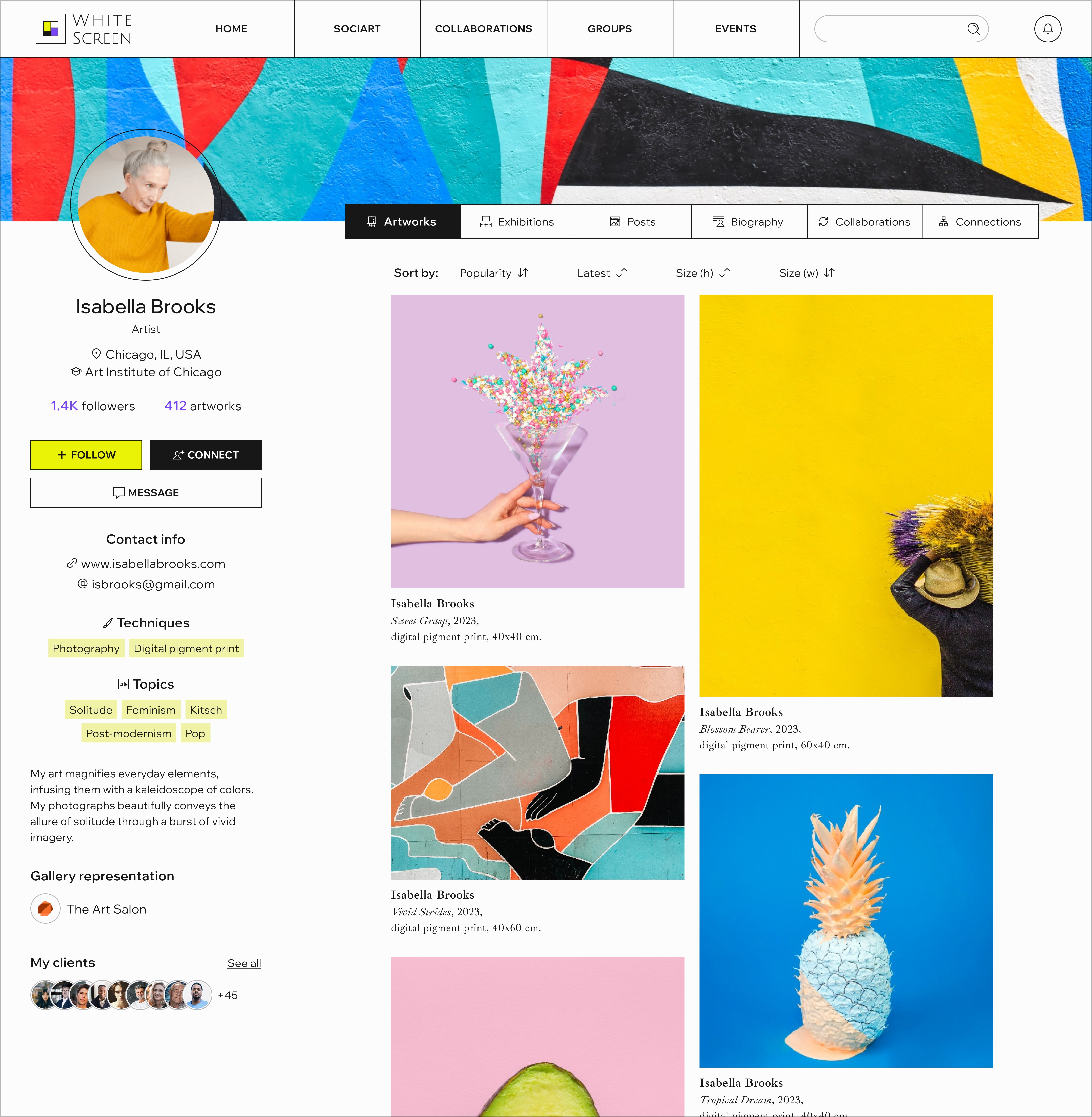
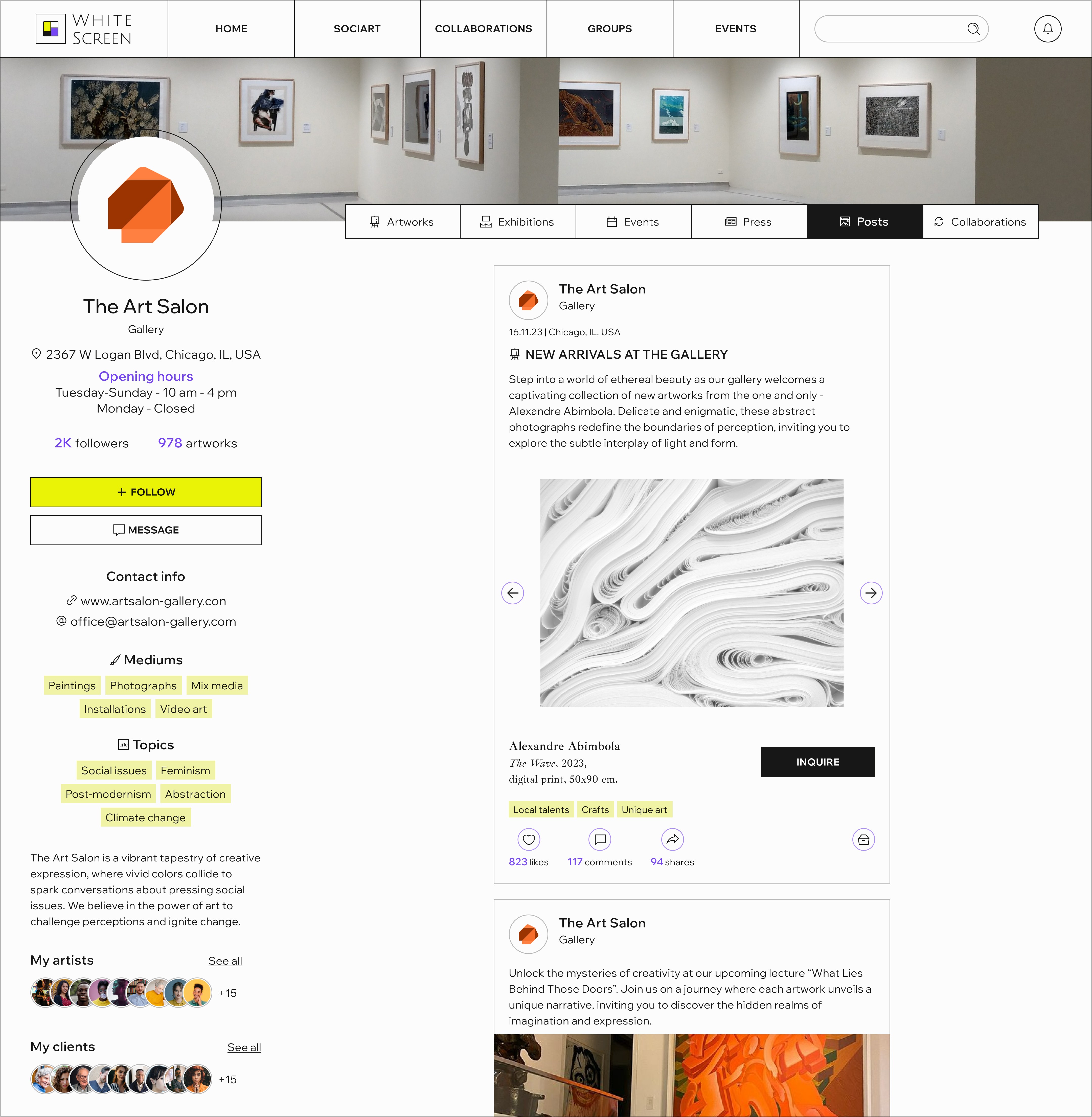
Customizable profiles for every user
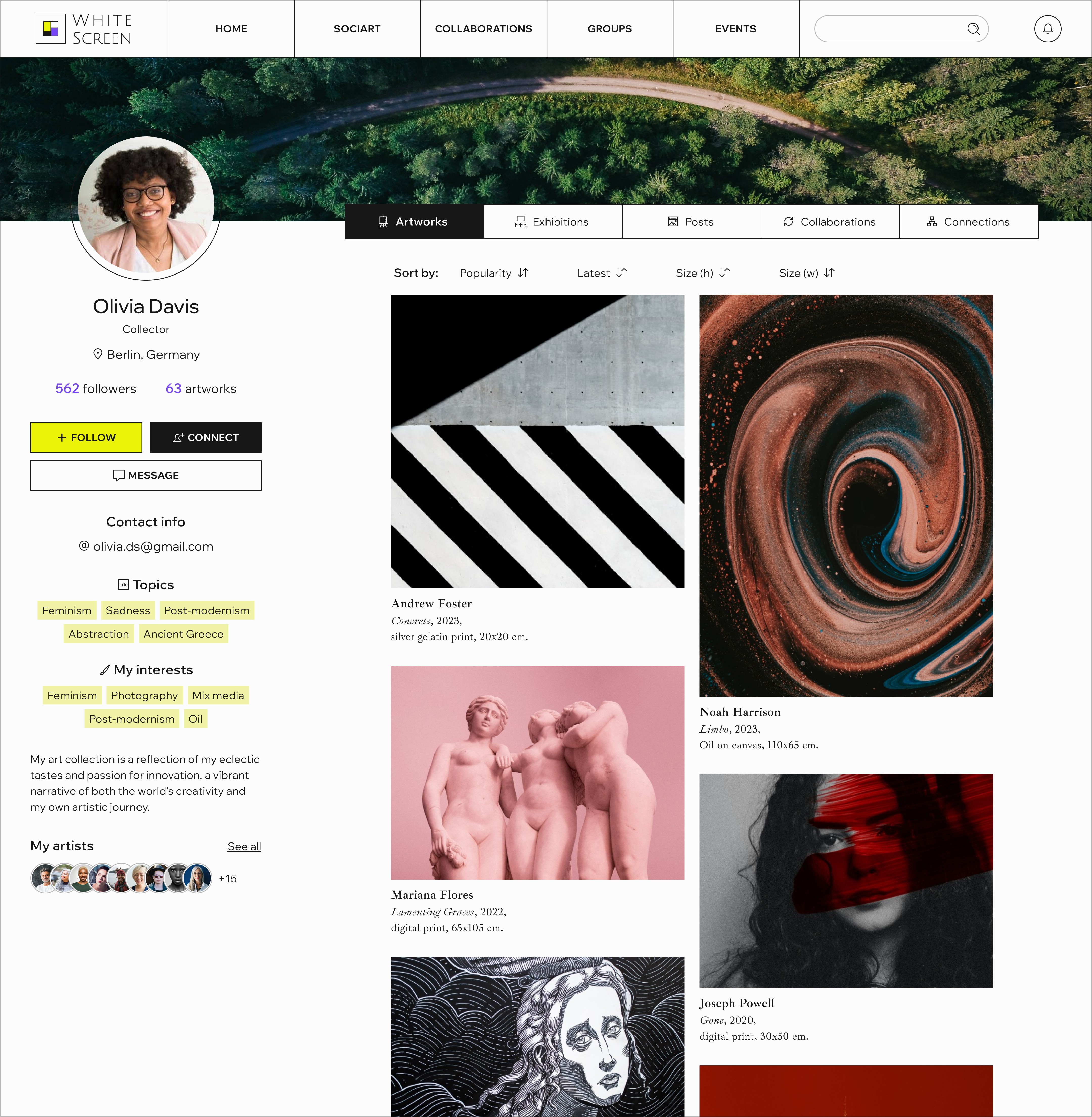
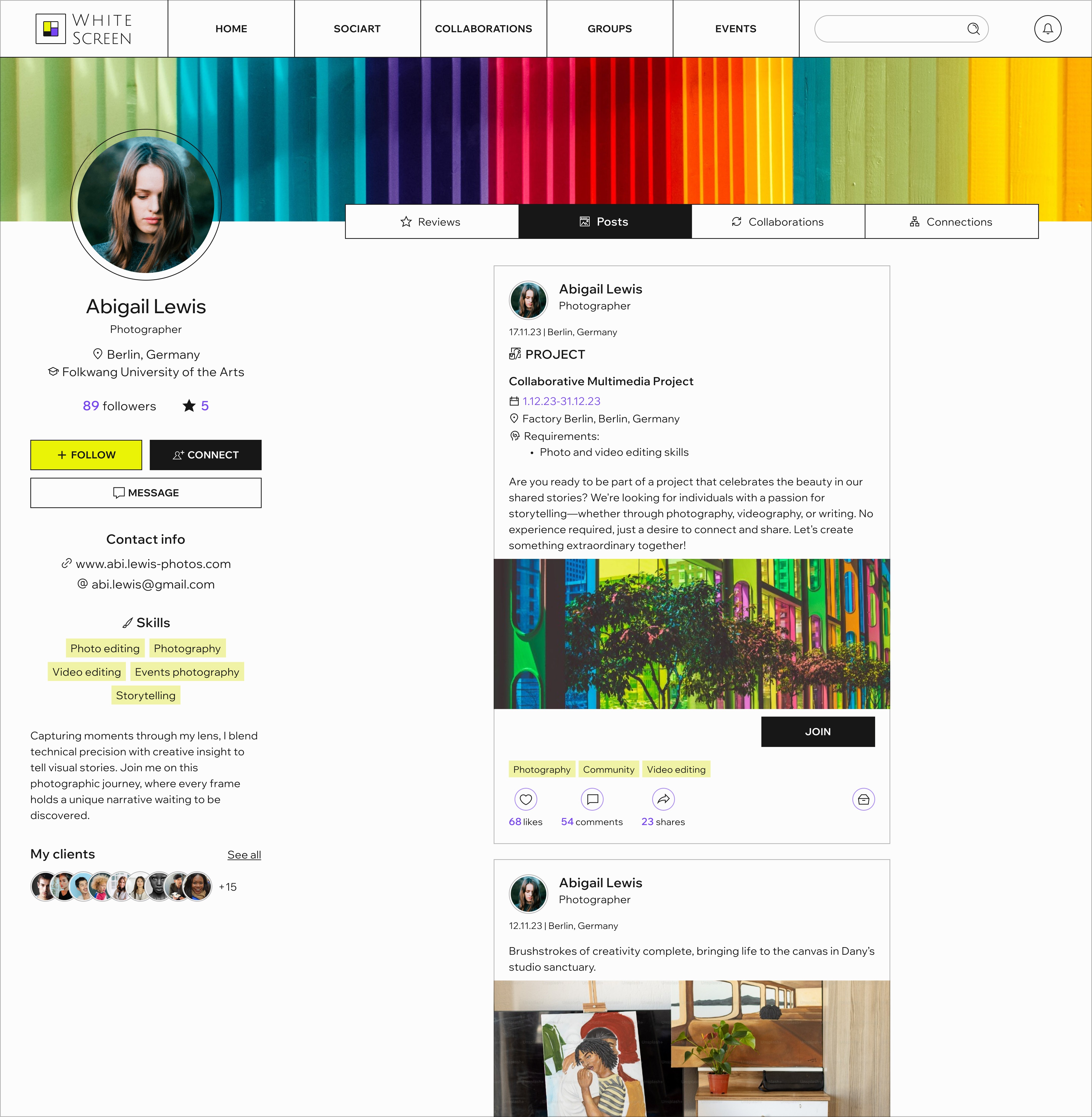
My biggest challenge was designing a profile page that serves artists, galleries, collectors, and professionals. The goal was to tailor each profile to the user’s needs while capturing all relevant information. Key sections include tags defining the user’s artworks, mediums, and techniques, which enable personalized connections. Since the profile functions as both a portfolio and a collection display, presenting artworks effectively was a top priority.
I also added a section for sending professional requests to add new clients, gallery representations, or artists to a collection, helping users build credibility and strengthen their networks.
Redefining art exhibitions through online collaboration
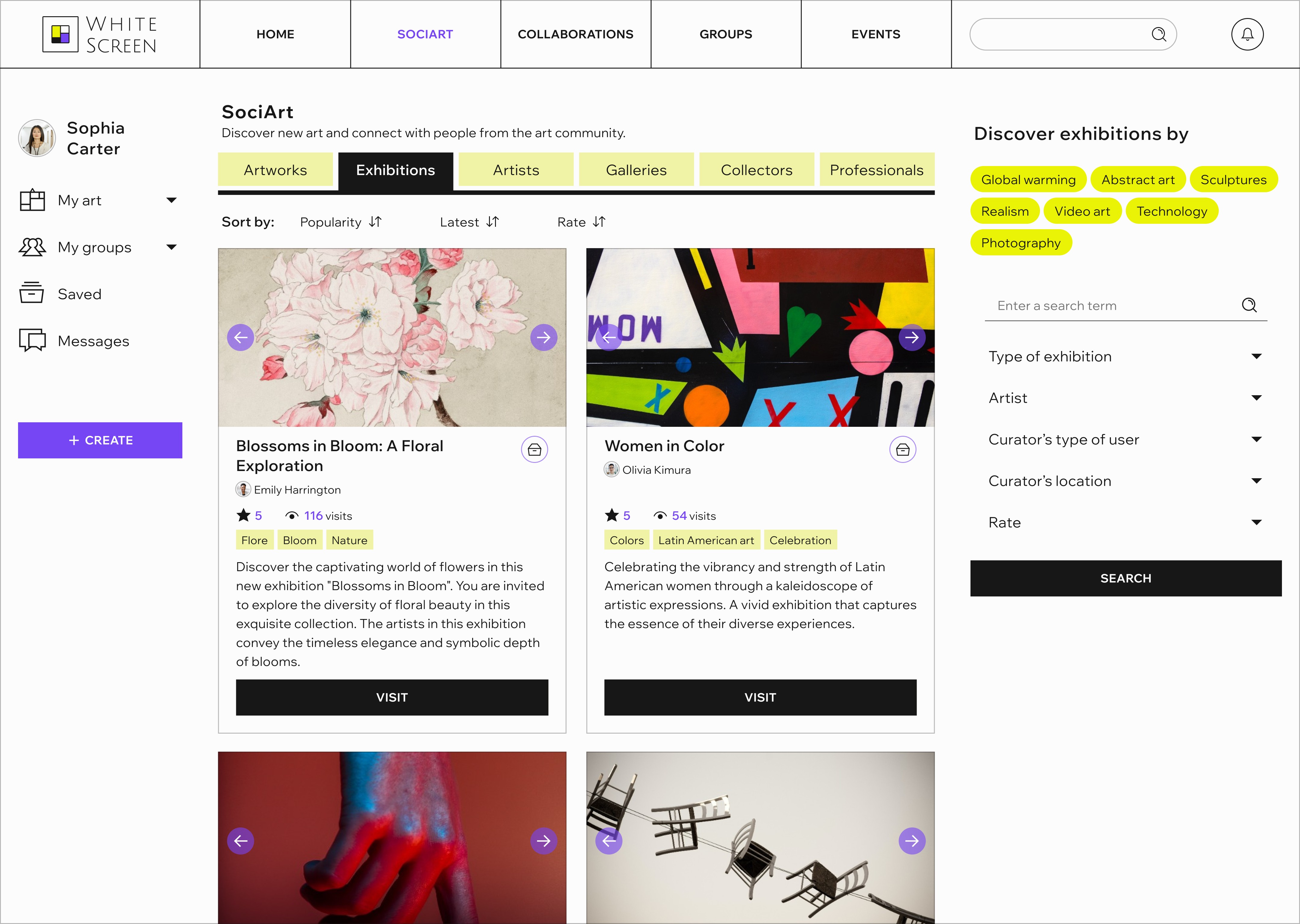
The idea behind the virtual exhibitions section was to enable further collaboration between users and introduce innovative ways to display and promote art within the platform. This feature was designed to enable international participation, reaching new audiences while eliminating the risks of damage associated with transporting and hanging physical artworks.
To ensure versatility, I conceptualized the online exhibition to complement on-site exhibitions by extending them virtually or, alternatively, serve as an option for visitors unable to attend in person, allowing them to explore more exhibitions from the comfort of their own space. It also introduces the concept of evolving exhibitions, where curators can add artists and artworks over time, redefining traditional exhibition formats to better suit dynamic needs.
Although not yet designed, I envision that any artwork’s participation in an online exhibition would be facilitated by a curator sending the owner a request for consent to display the artwork. This consent would serve as a digital legal loan contract.
Finding the right connections and content
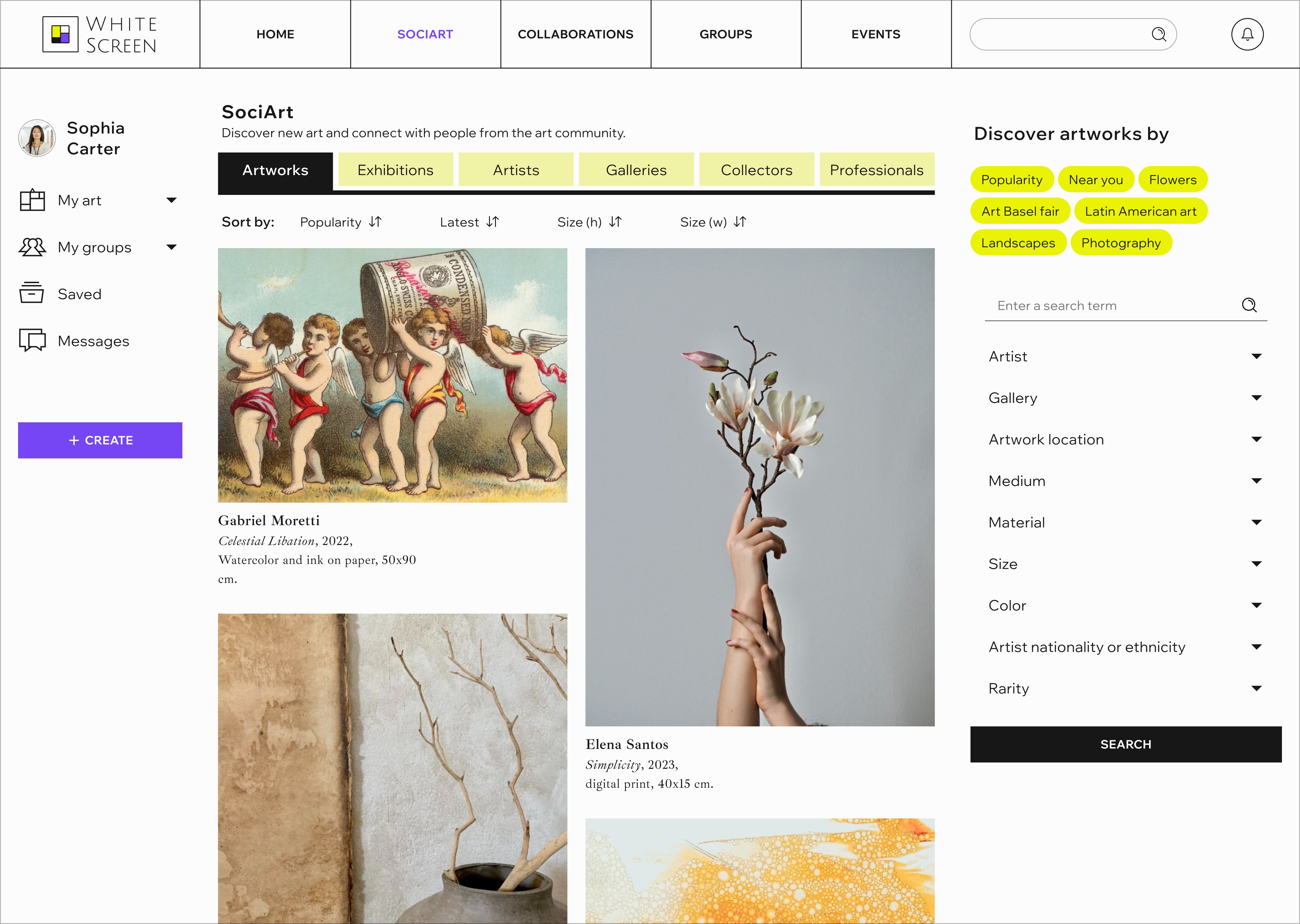
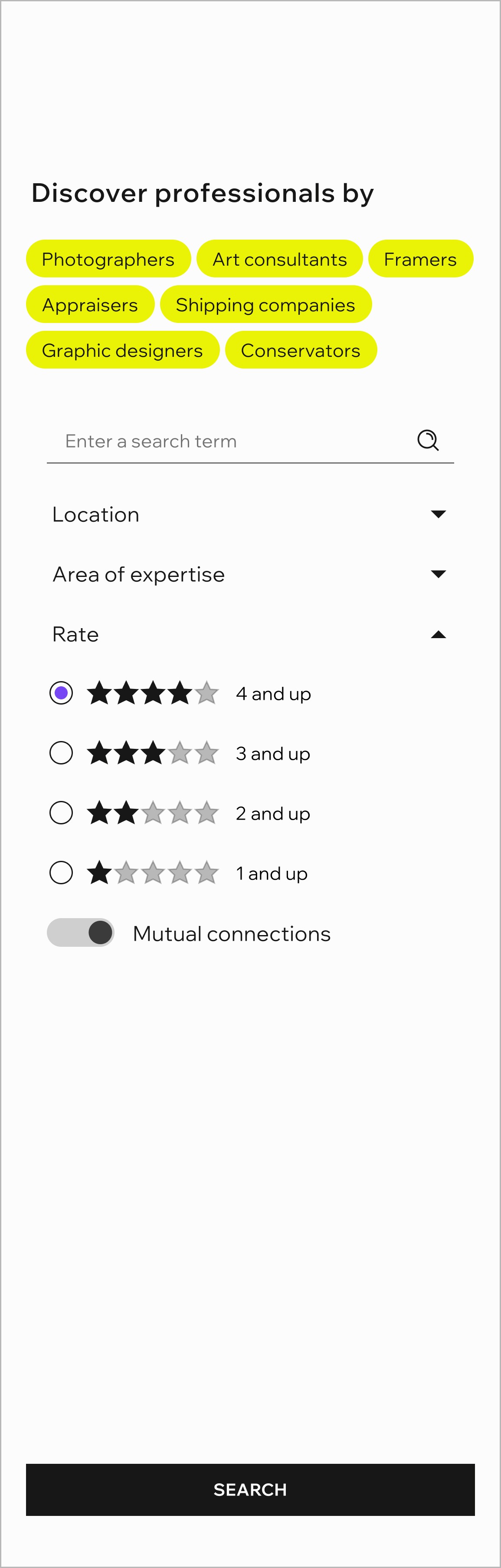
For the discovery section, developing a well-organized information architecture was crucial, with a focus on clearly distinguishing the different search options. To achieve this, I separated the options into tabs, allowing users to view all available choices at once and select their preferred one. Each tab features a tailored sorting option and a search panel equipped with a broad range of filters to ensure accurate results.
The cards in the professionals portal show both rates and mutual connections, helping build trust and making it easier to hire reliable professionals to handle artworks.
Key interactions
Enhancing the experience with thoughtful details
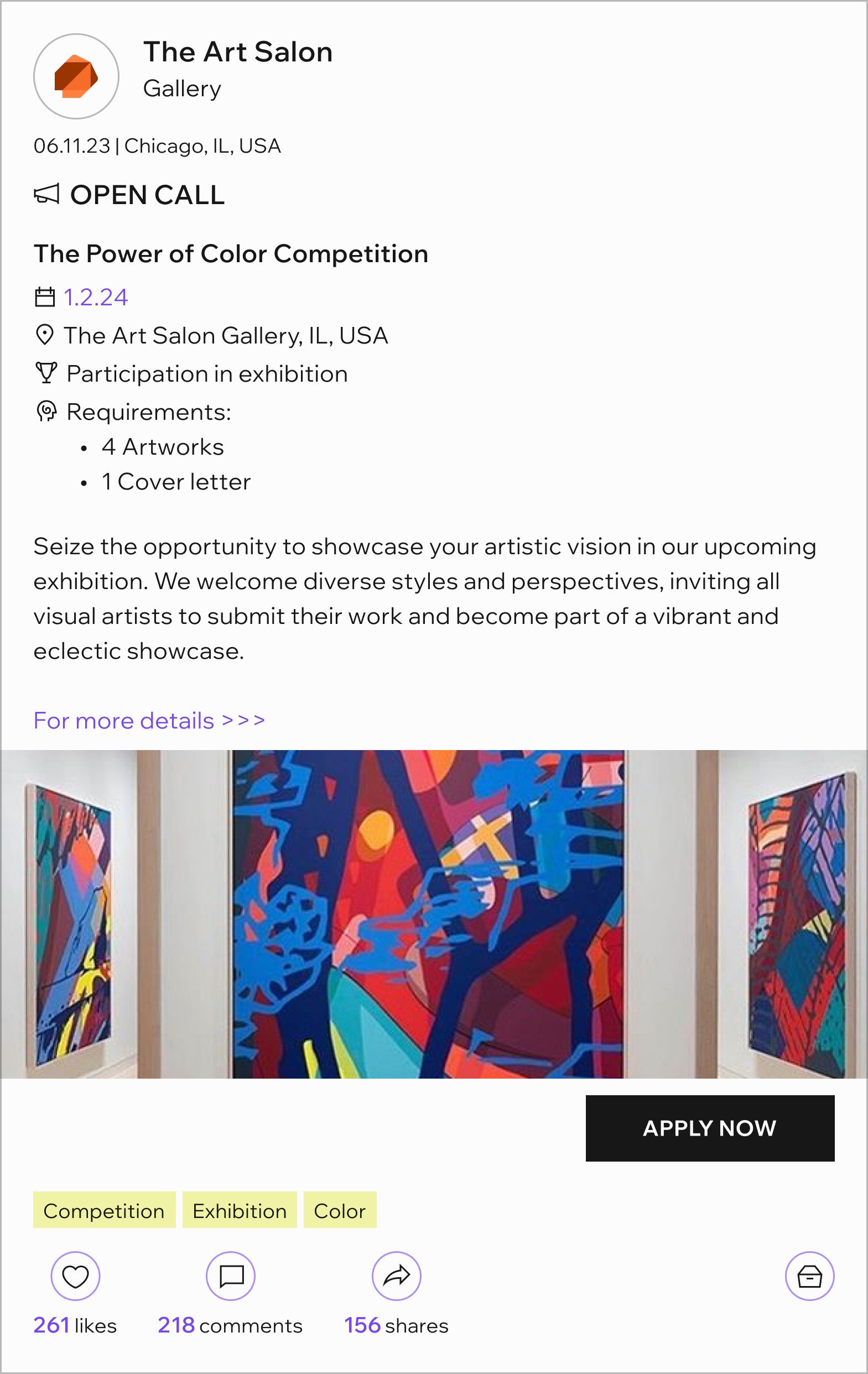
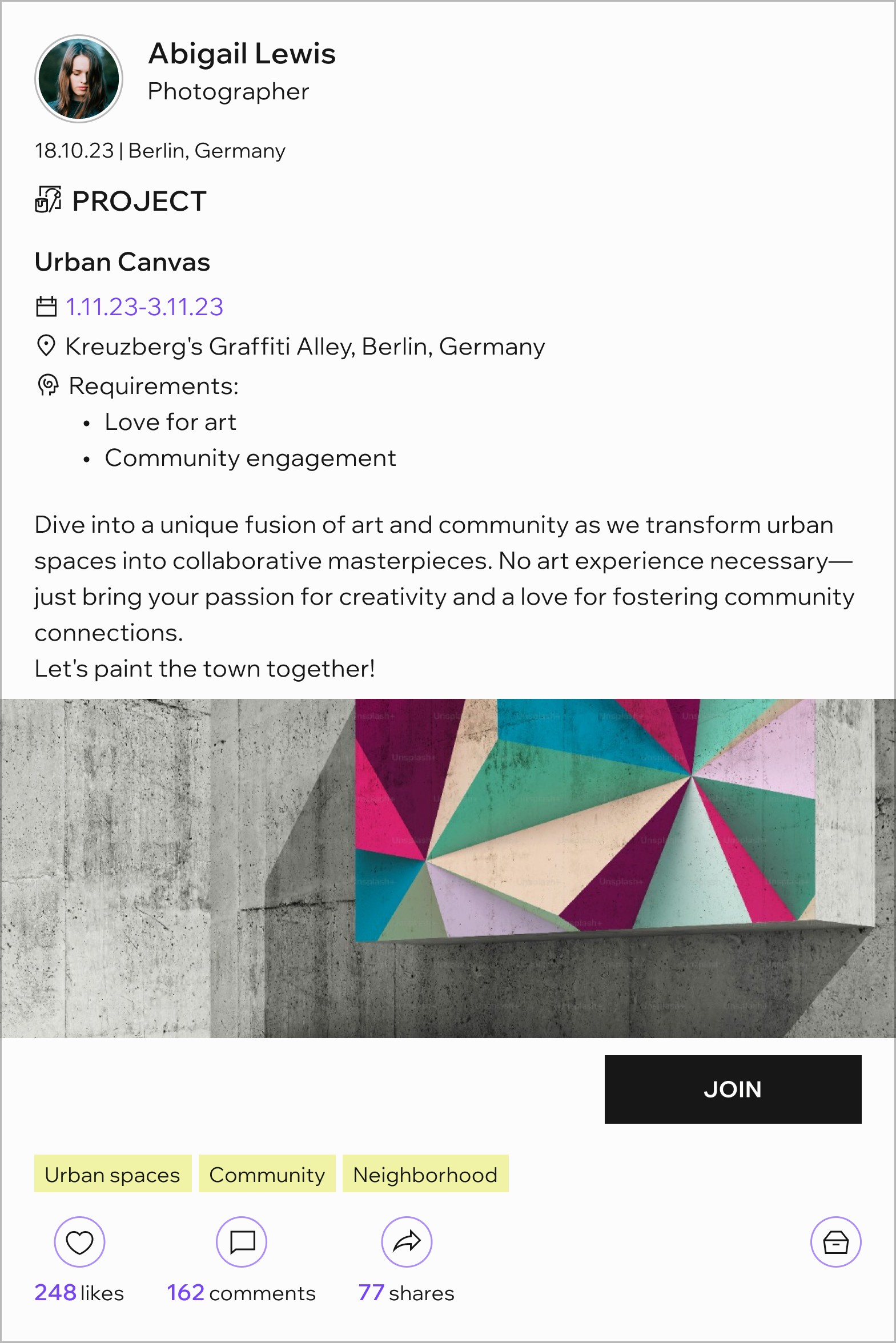
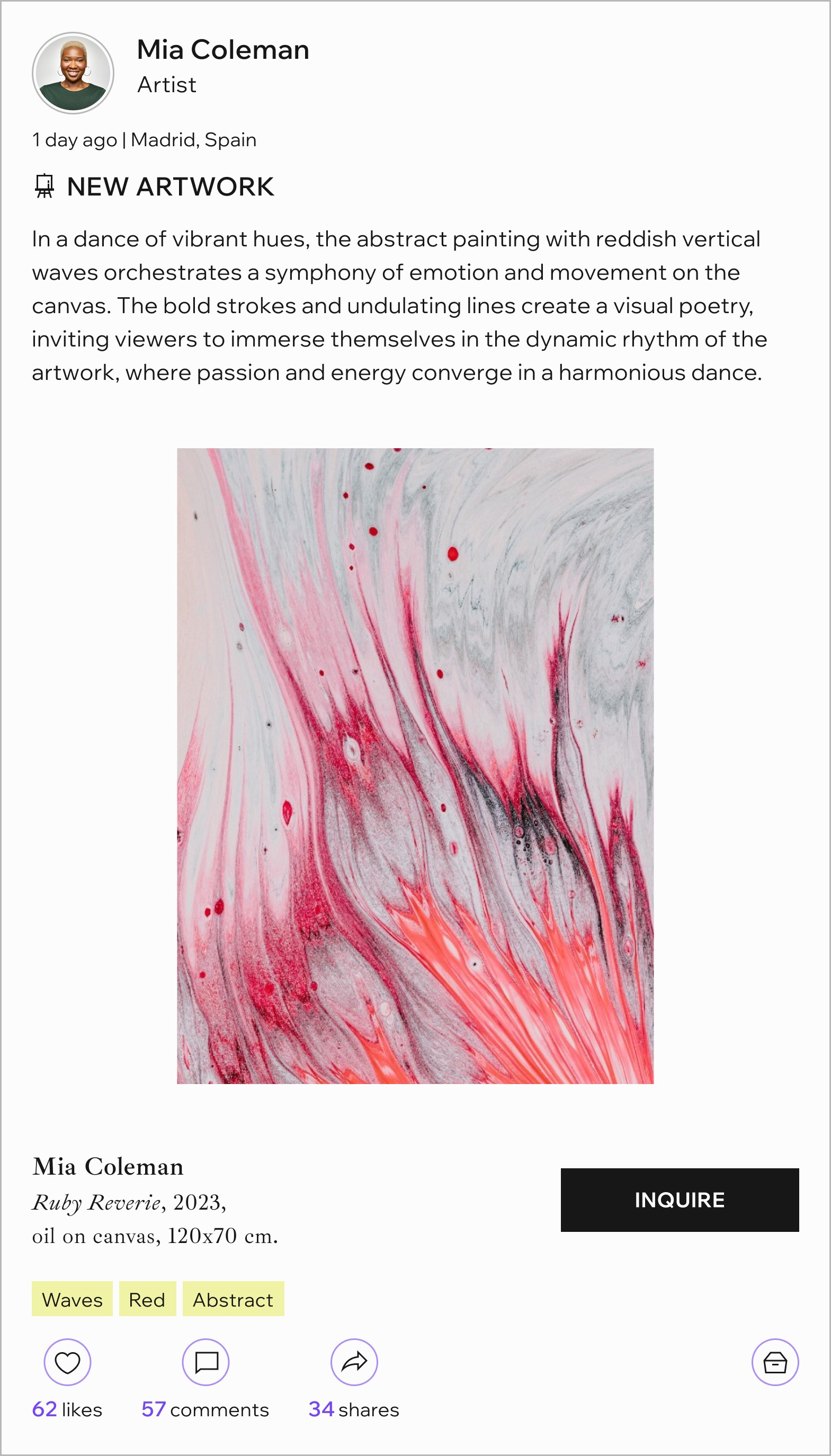
Structured posts for quick insights
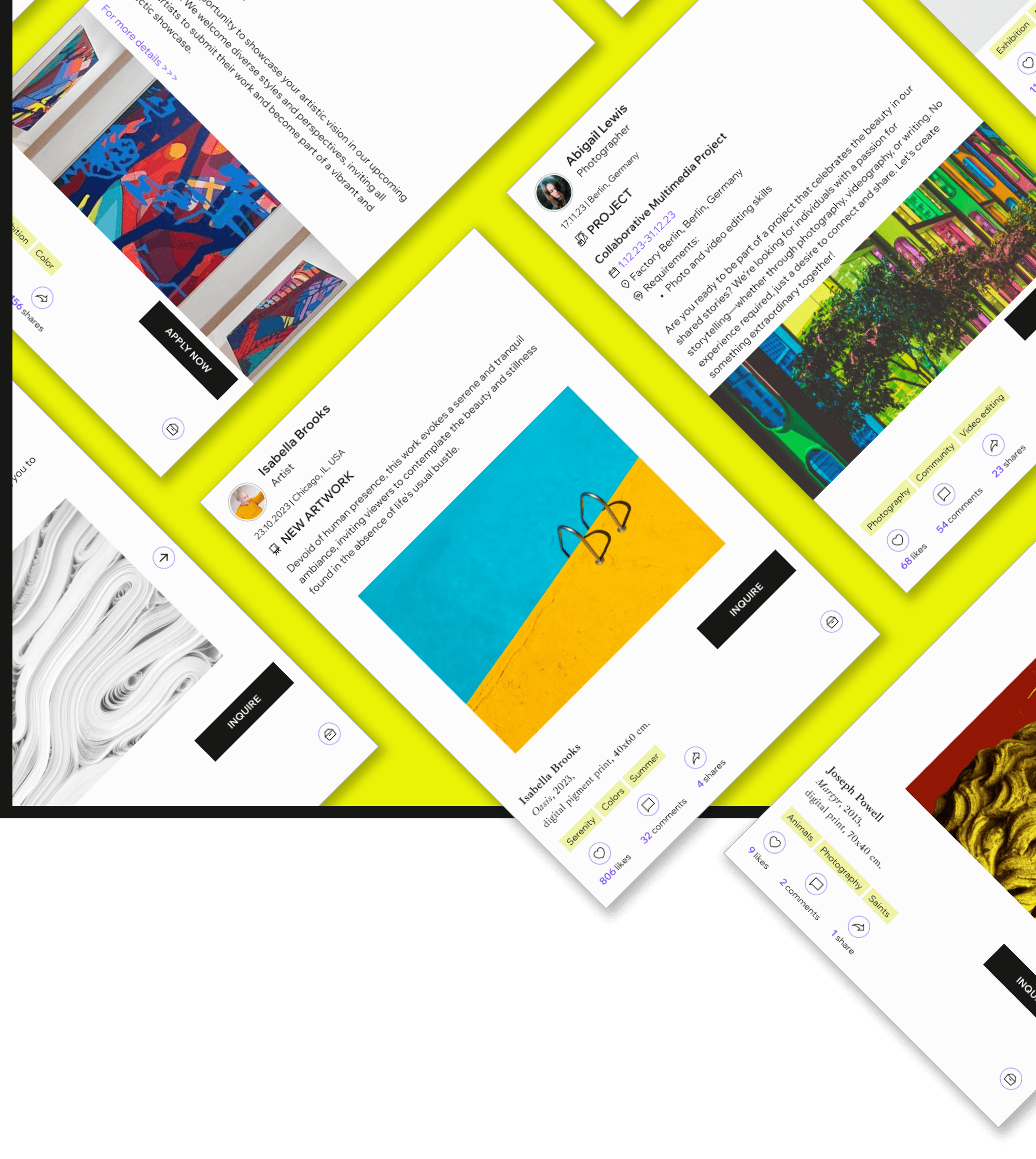
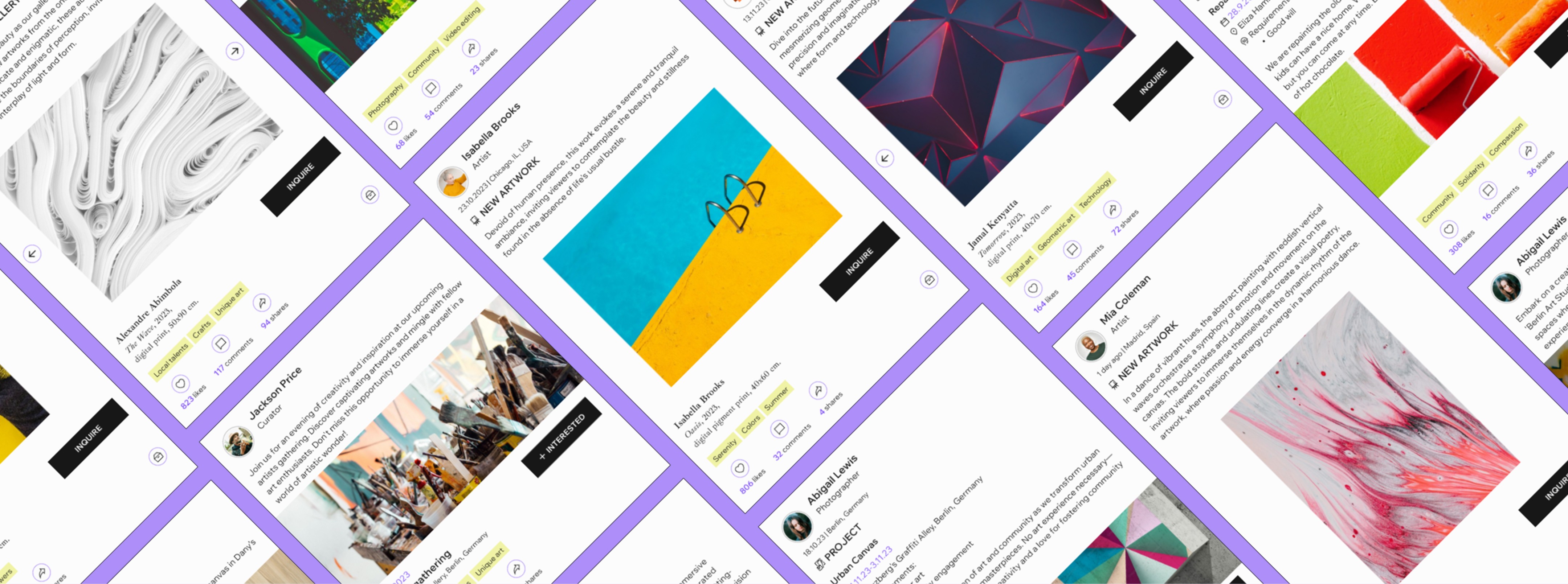
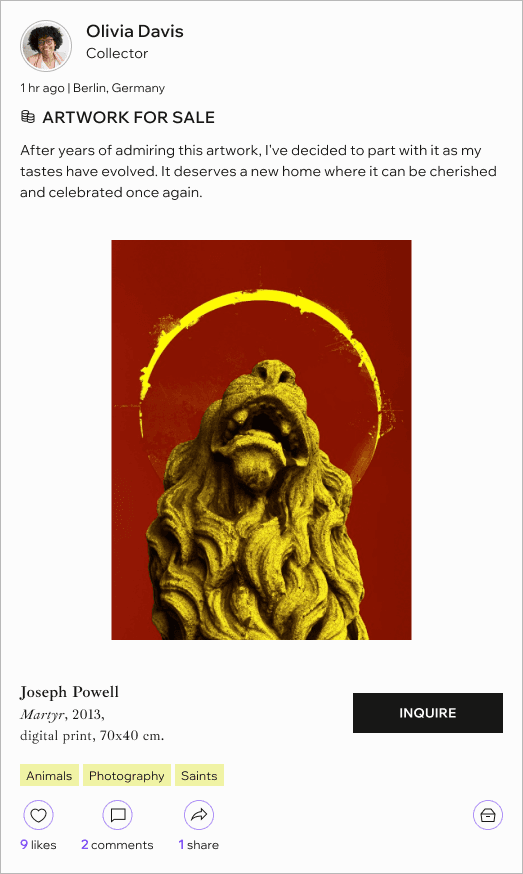
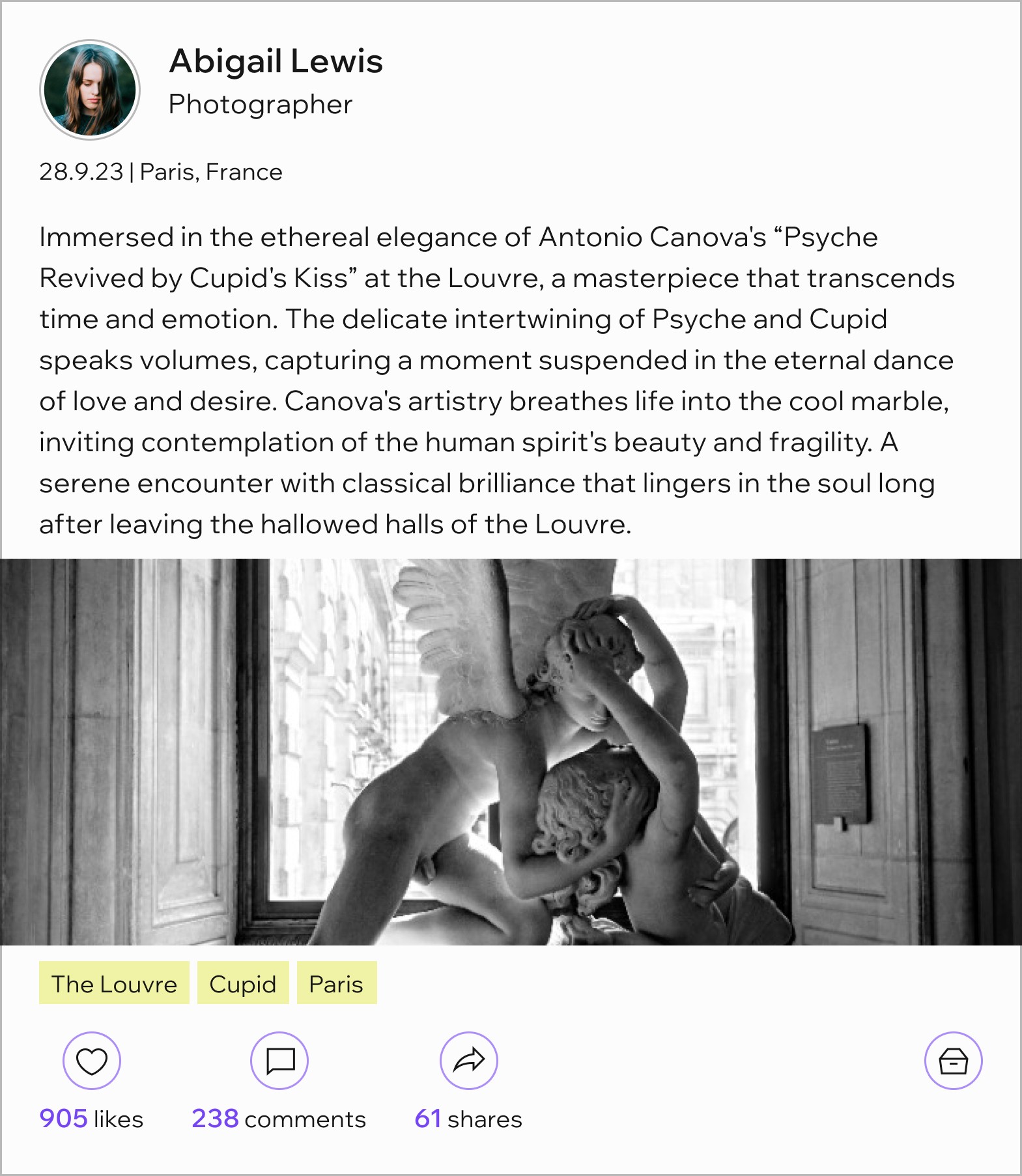
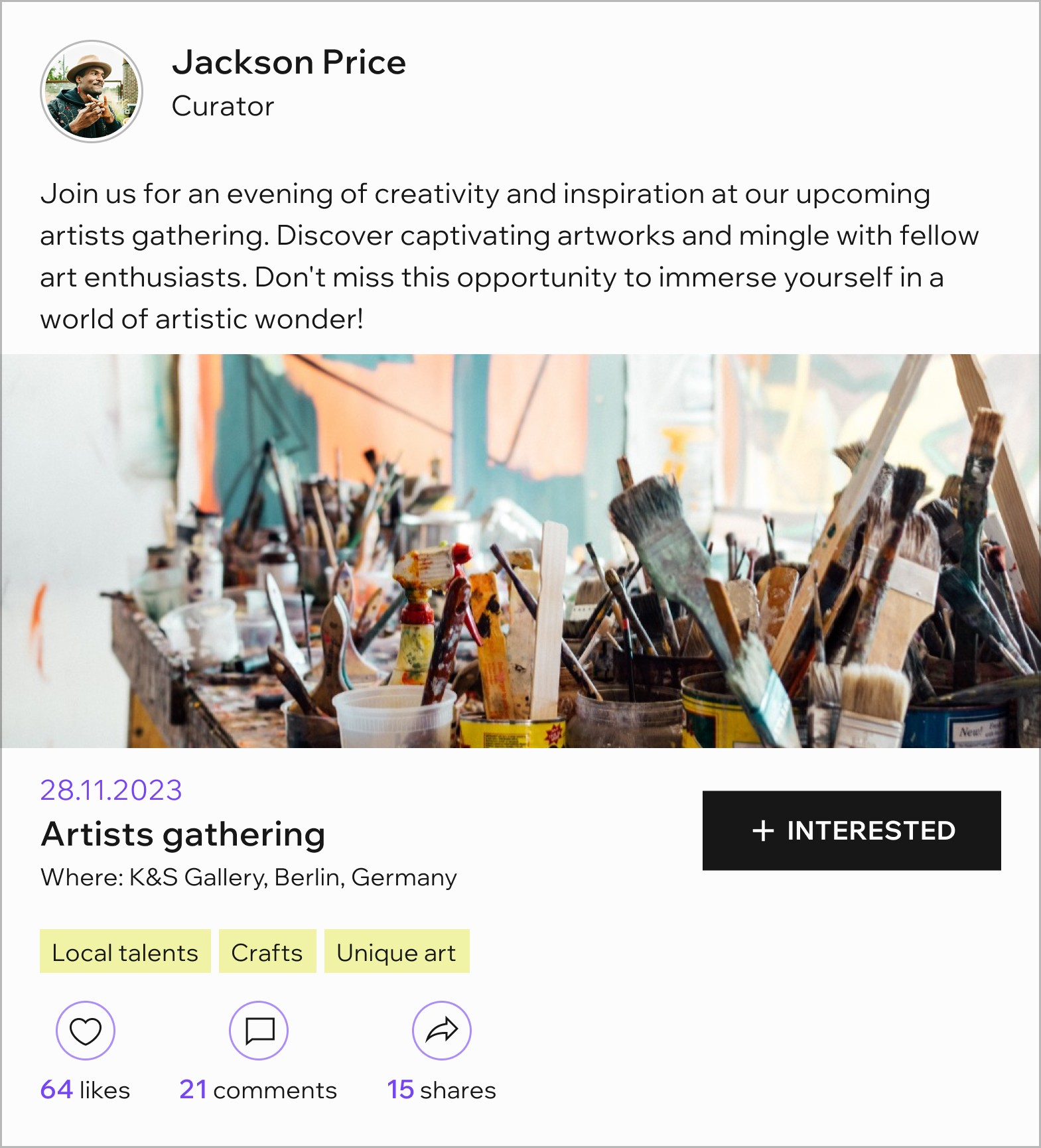
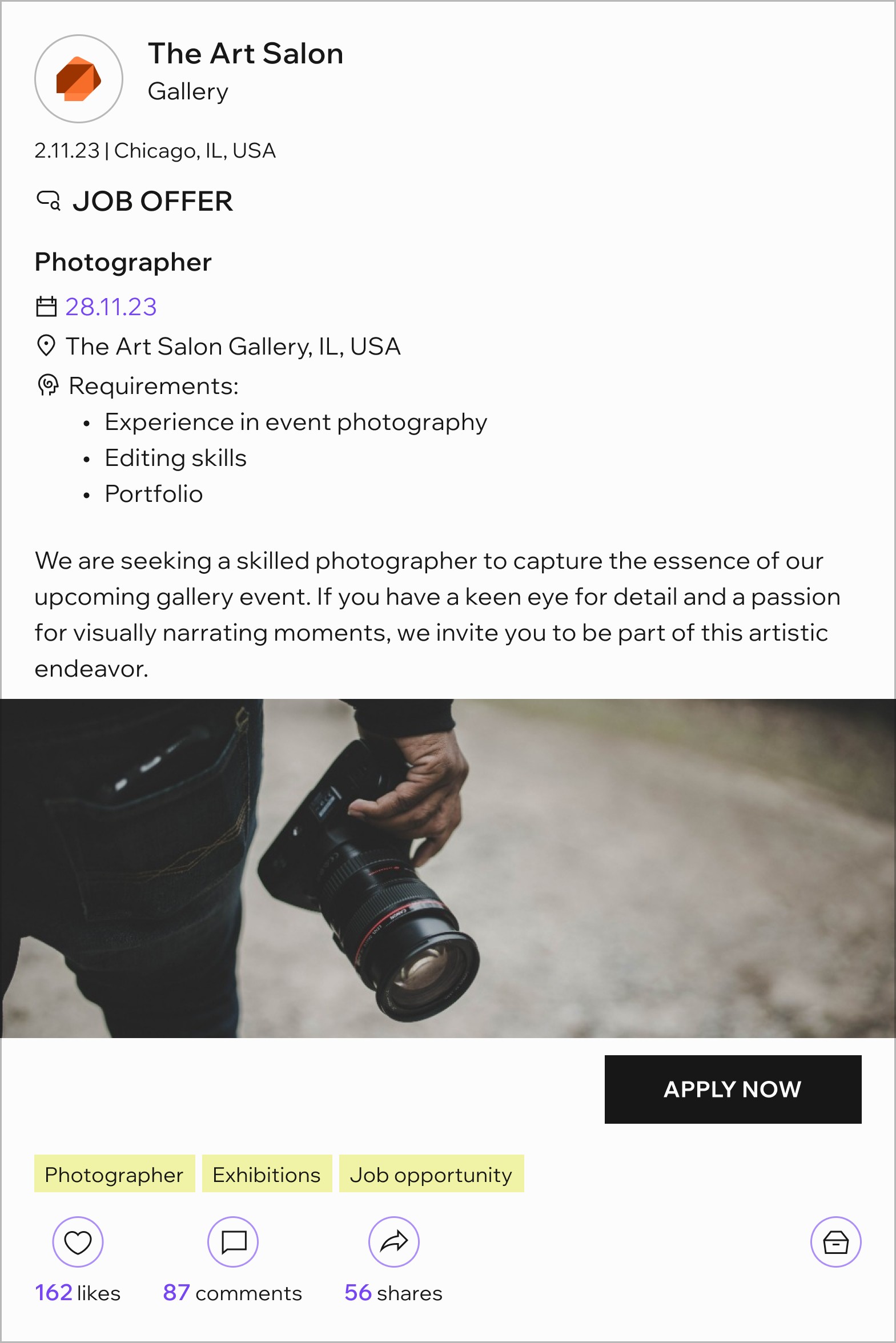
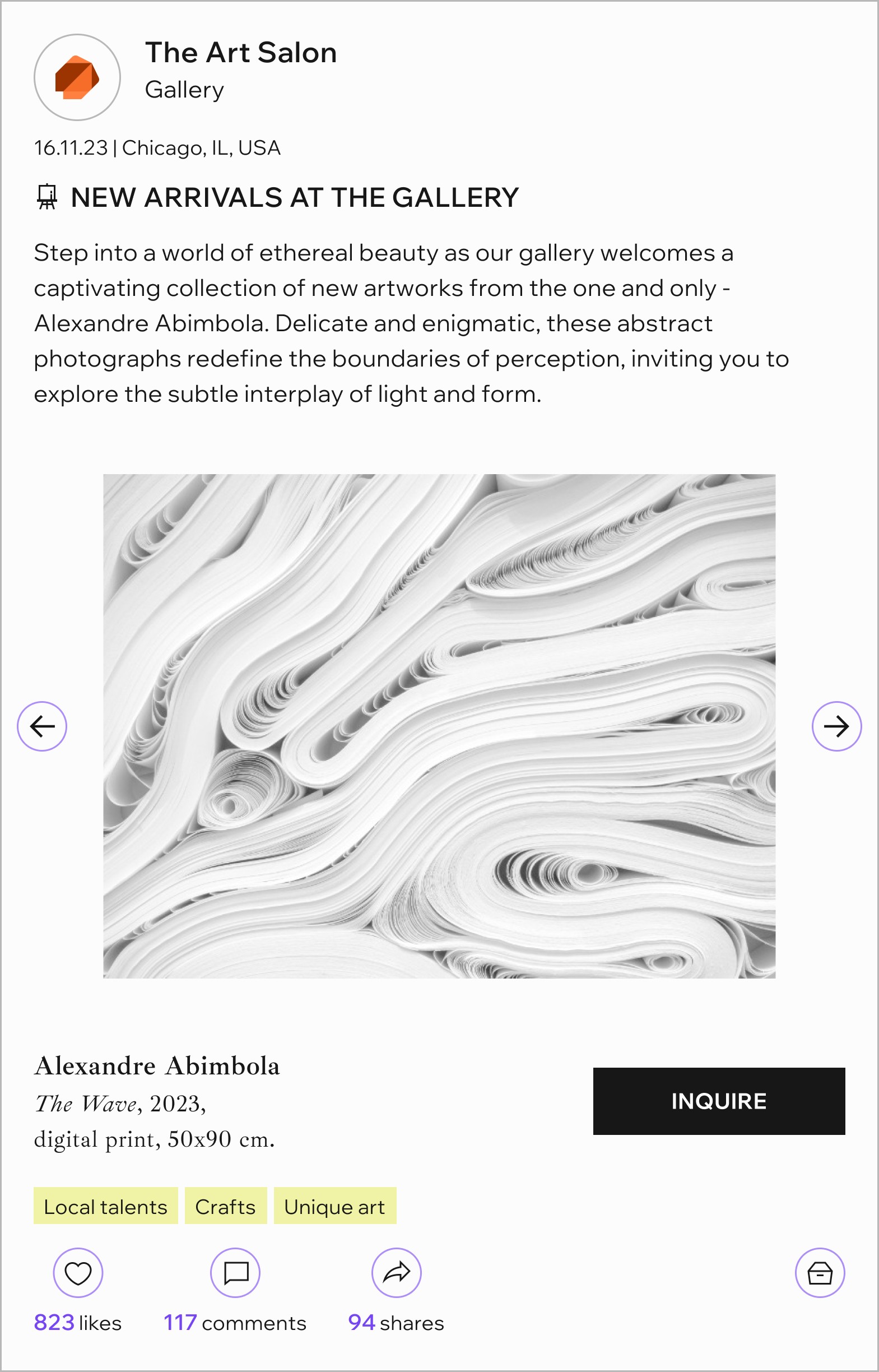
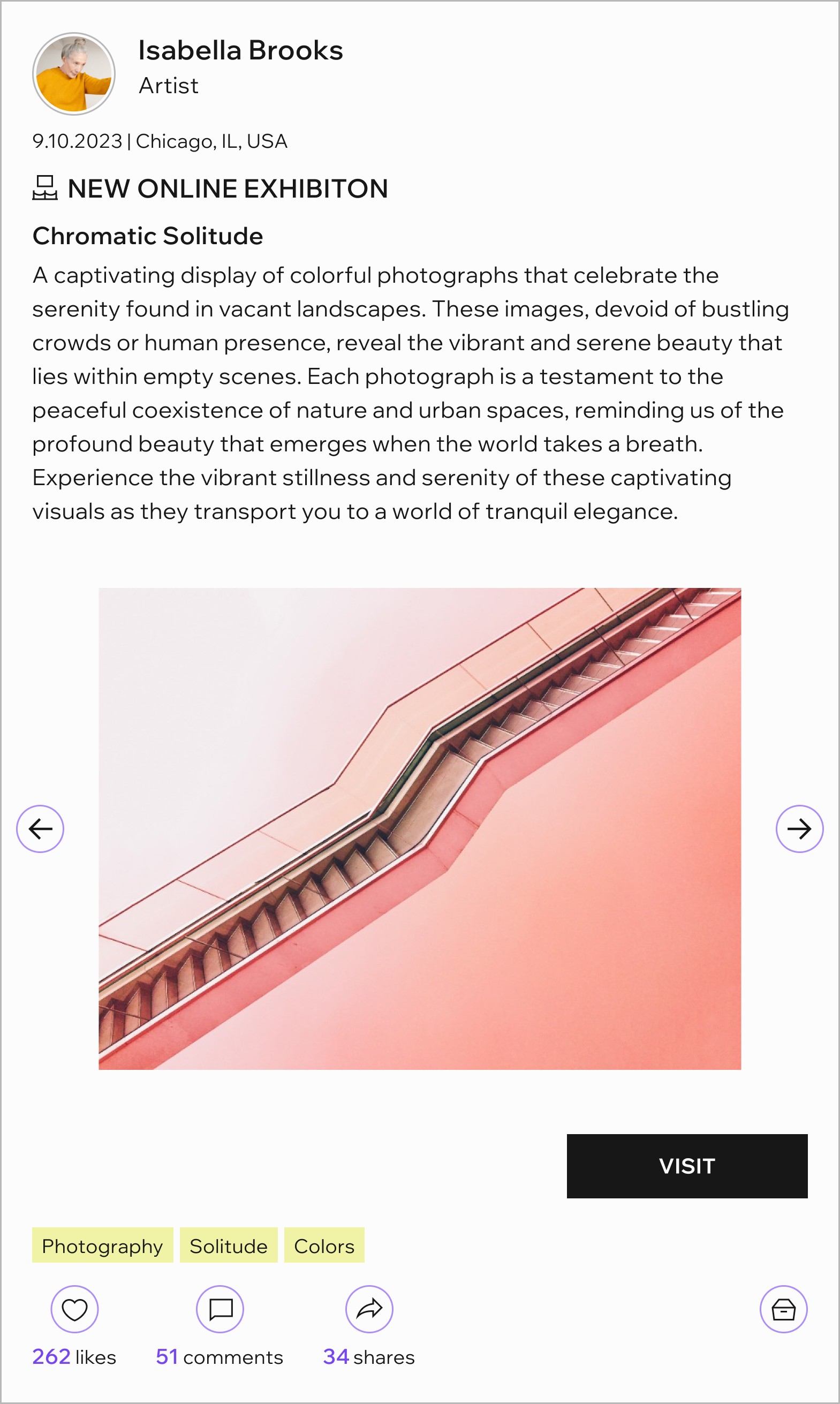
I designed nine custom cards for different feed posts, each with a clear title, a customized CTA (or none when unnecessary), and specific input fields for adding essential information such as project name, dates, location, and requirements, helping users quickly scan and understand the content.
Engaging and distraction-free presentation
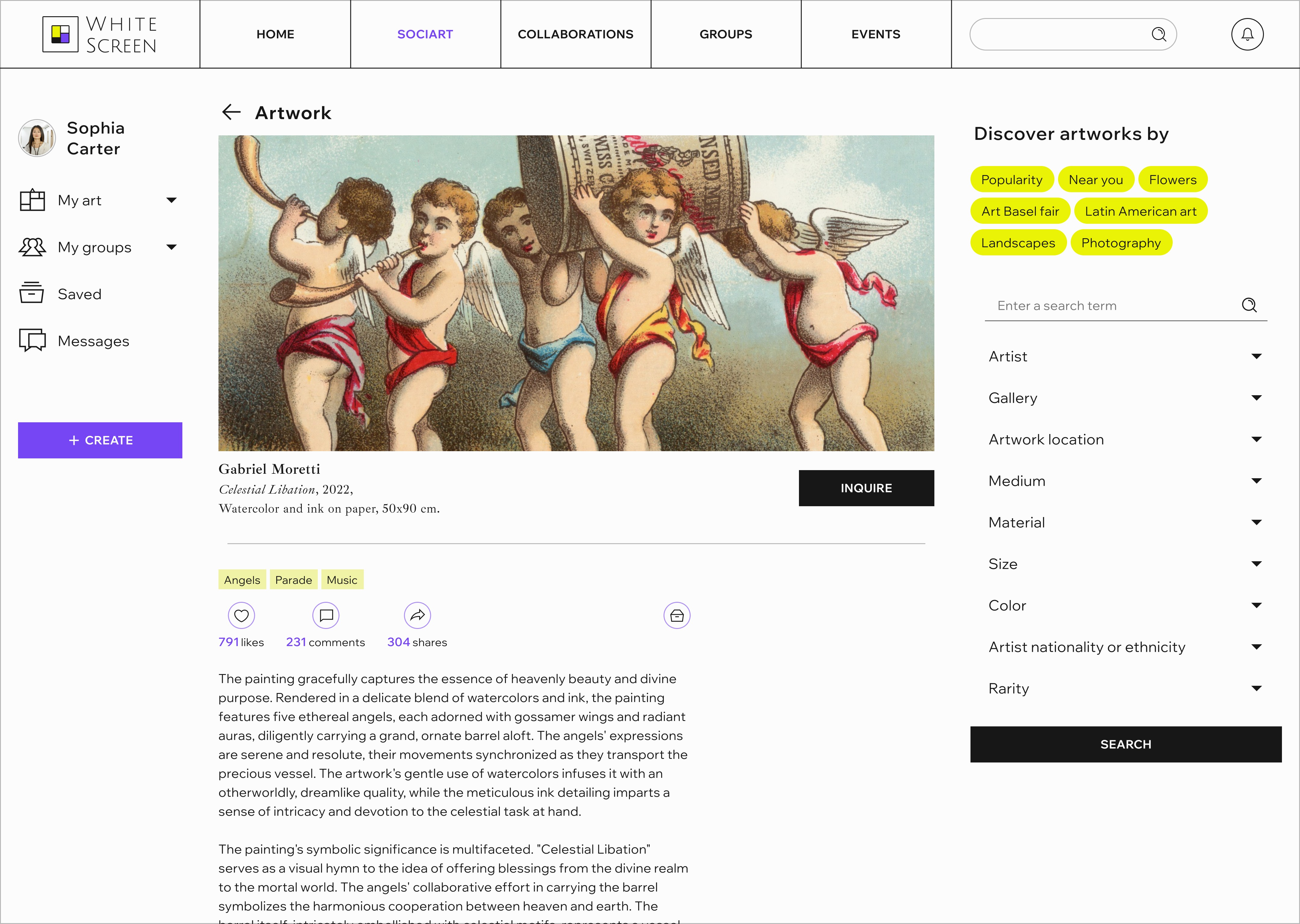
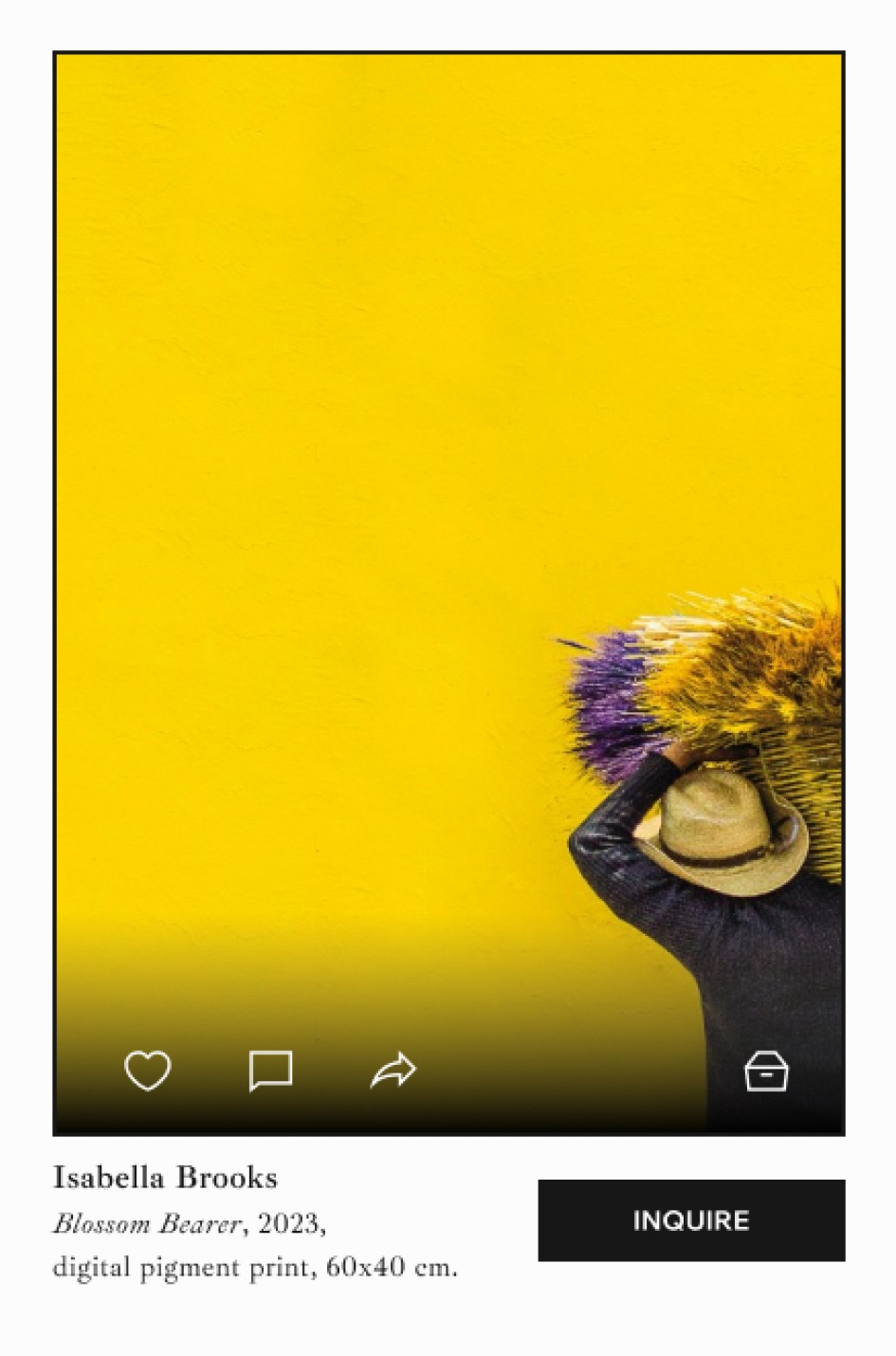
Each artwork card functions as a post card: users can like, comment, share, save and even inquire about the price.
To keep the artwork display clean and distraction-free, action icons only appear on hover, with a subtle frame highlighting the card.
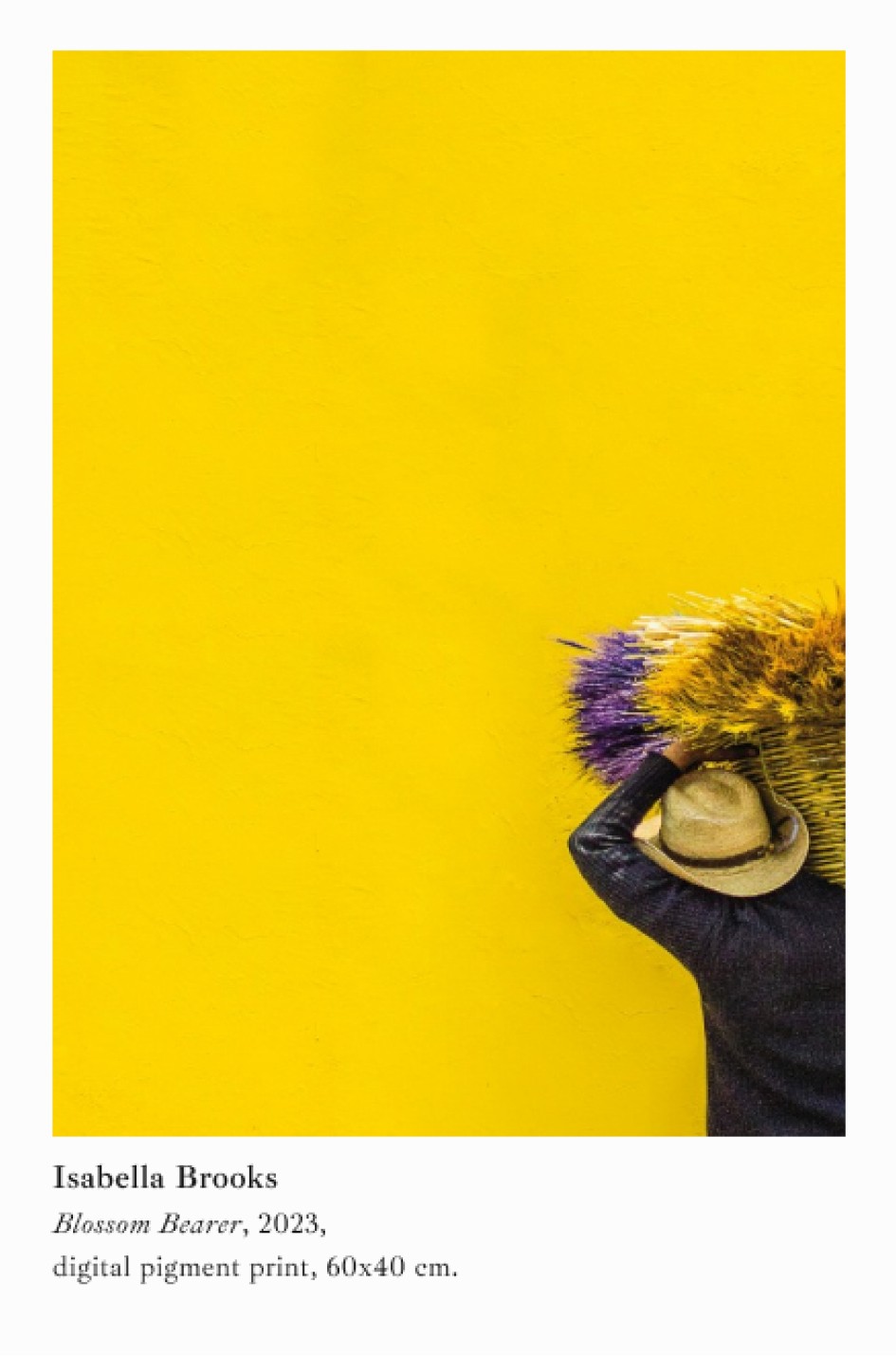
For the artwork details, I relied on the conventional format used in the artworld.
Branding & style guide
A modern identity for contemporary art
Branding with a nod to art history
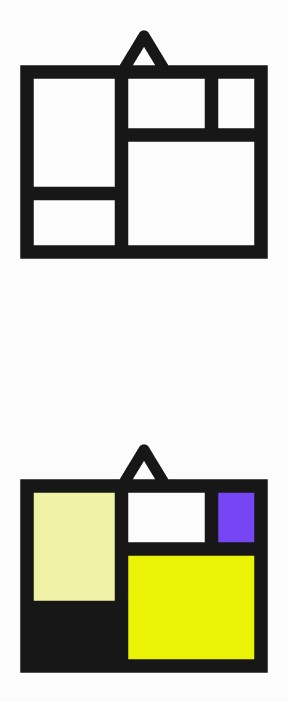
The logo draws inspiration from the work of Piet Mondrian, one of the leading artists of modernism, featuring straight black lines, flat forms, and pure colors enhanced with bold accents of yellow and purple. This creates a brand identity that combines a clean and sophisticated design with an edgy aesthetic, reflecting contemporary art.
Naming with meaning
The name is a word game that comes from the common term in modern art “White Cube”, referring to the optimal way of displaying contemporary art: on white and large walls to keep the focus on the art.
Typography
Wix Madefor Display
For the platform, I chose a modern and clean font to ensure it wont compete with the visual content.
Ibarra Real Nova
For the artworks’ details, I opted for a sophisticated serif font to distinguish it from the system’s primary typography, adding a delicate touch that reflects the refined nature of art.
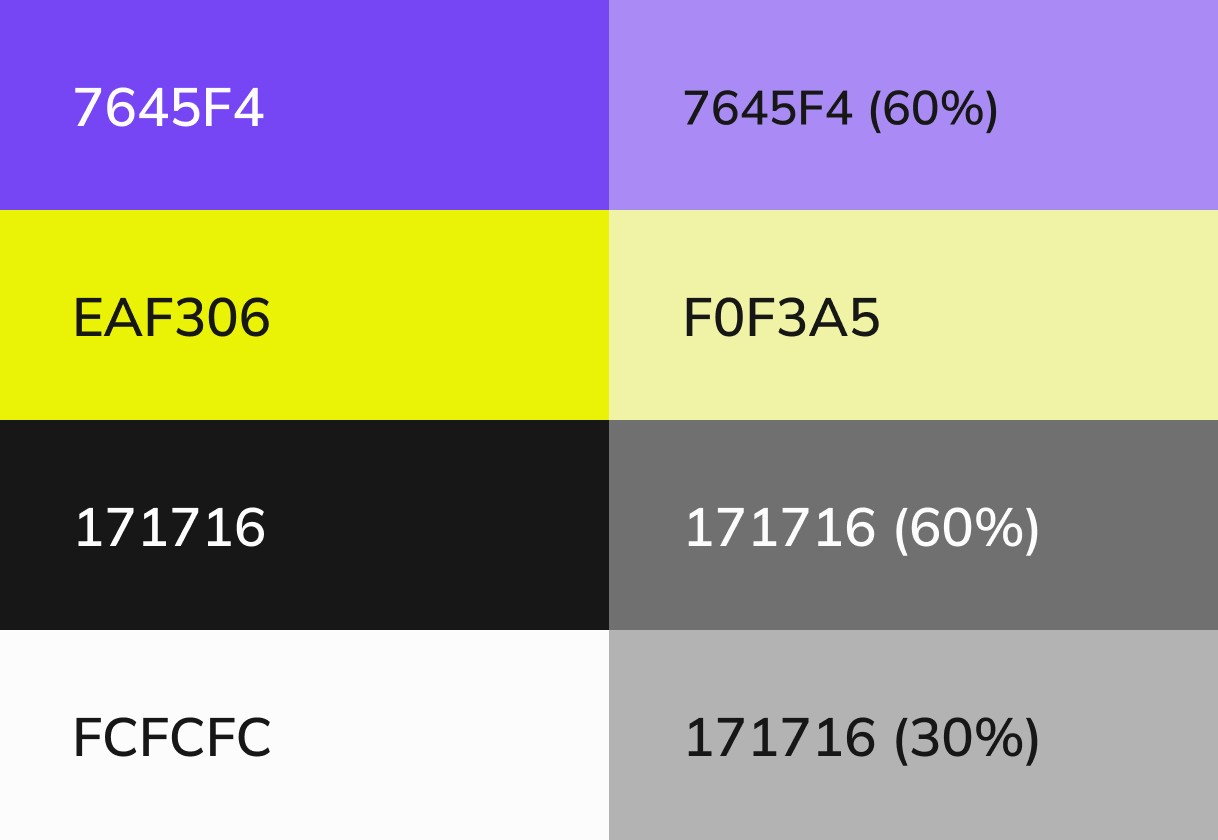
Color palette
Action Icons

Like

Comment

Share
Save
Rate
Sidebar Icons
My art

My groups
Messages
Informative Icons
Next steps
Expanding features and accessibility
The next step would be to create a mobile version and expanding the platform’s features: developing a projects section to allow users to create or join art-related initiatives, and an open calls section to provide detailed information, deadlines, and real-time updates on opportunities.
Additionally, enhancing content organization and diversity to improve usability and engagement: categorizing artworks by availability for easier navigation of the market, and including additional mediums in the art display, such as video, sculpture, and other art forms, to better accommodate different artistic expressions.